


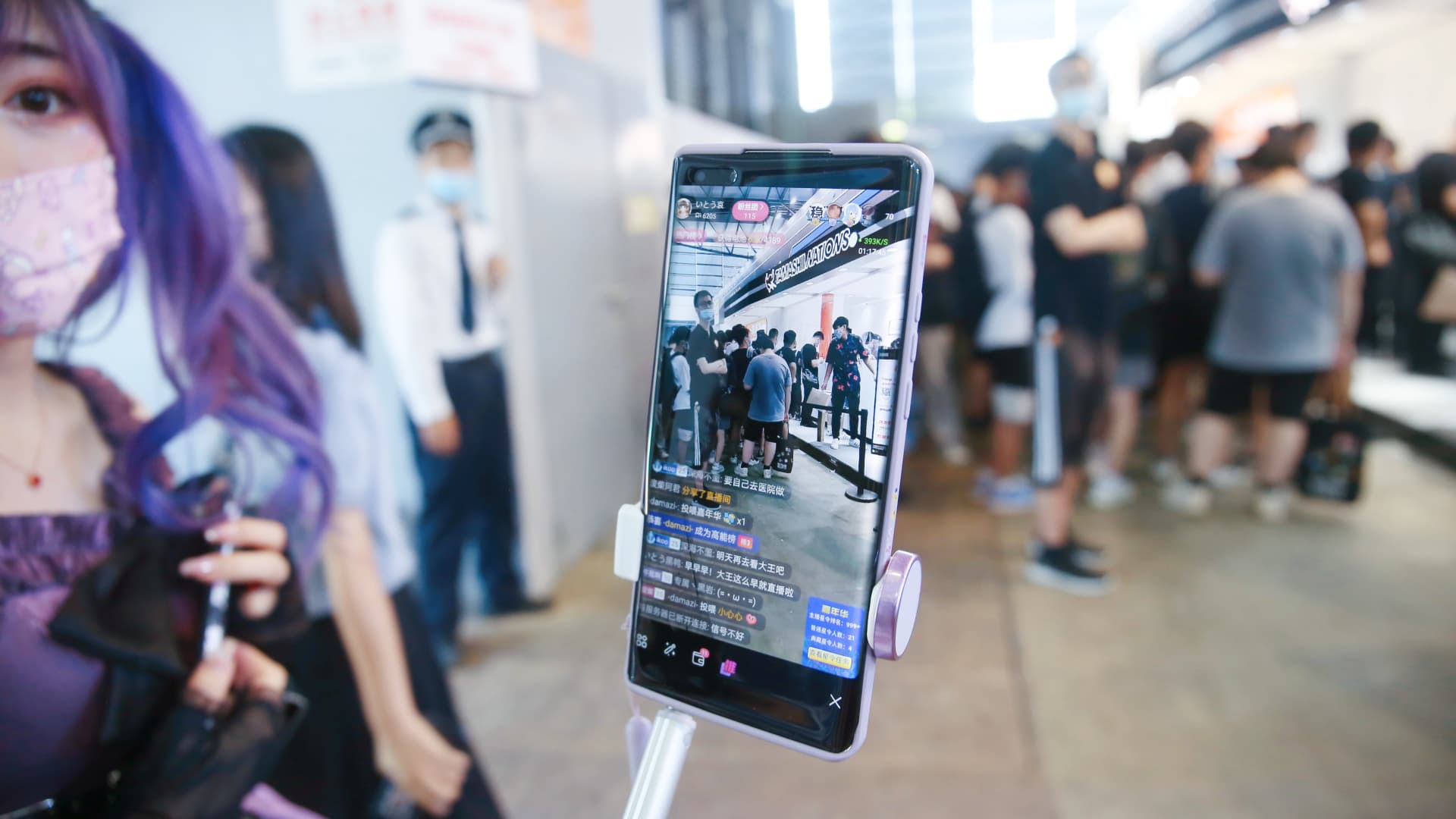
Chinese regulators have been looking to clean up the country’s popular livestreaming industry. This includes rules around what online influencers can and can’t say and the topics that are off limits.
Costfoto | Future Publishing | Getty Images
Online influencers in China must now have a qualification to talk about certain topics such as law and medicine, regulators said Tuesday.
For content that requires a “higher professional level,” livestreamers must hold a corresponding qualification to talk about those subjects, China’s State Administration of Radio and Television and the Ministry of Culture and Tourism said in a joint release.
Influencers must show those qualifications to the livestreaming platform they use. Those qualifications then need to be reviewed by the platform.
The latest rules continue Beijing’s efforts to clean up its extremely popular livestreaming sector that involves some of China’s biggest companies from Tencent and Alibaba to TikTok-owner ByteDance. Influencers often use such platforms to sell products and are able to rake in billions of dollars of sales in a matter of hours.
Over the past 16 months, China has enacted new regulations across different areas of the technology sector in a bid to reign in the power of its once free-wheeling tech giants. There has also been a push for greater control over areas Beijing sees as influencing society including video games, livestreaming and celebrity culture.
Last month, Chinese regulators banned children under 16 years old from watching livestreaming content after 10 p.m. and buying virtual gifts for influencers.
The latest rules from the two Chinese government agencies lays out a “code of conduct” for online influencers.
Livestreamers are not allowed to publish content that weakens or distorts the leadership of the Chinese Communist Party, for example. China has a strict censorship system that means content that Beijing does not like will be removed from the internet.
Influencers are also not allowed to use so-called deep fake technology to tamper with party or state leaders. This technology uses artificial intelligence to distort faces and could be used to insert the face of a politician or leader into a video they were not in.
Livestreamers are also not allowed to show excessive food waste, lots of luxury goods or an extravagant lifestyle, and content should not be sexually suggestive or provocative.

