


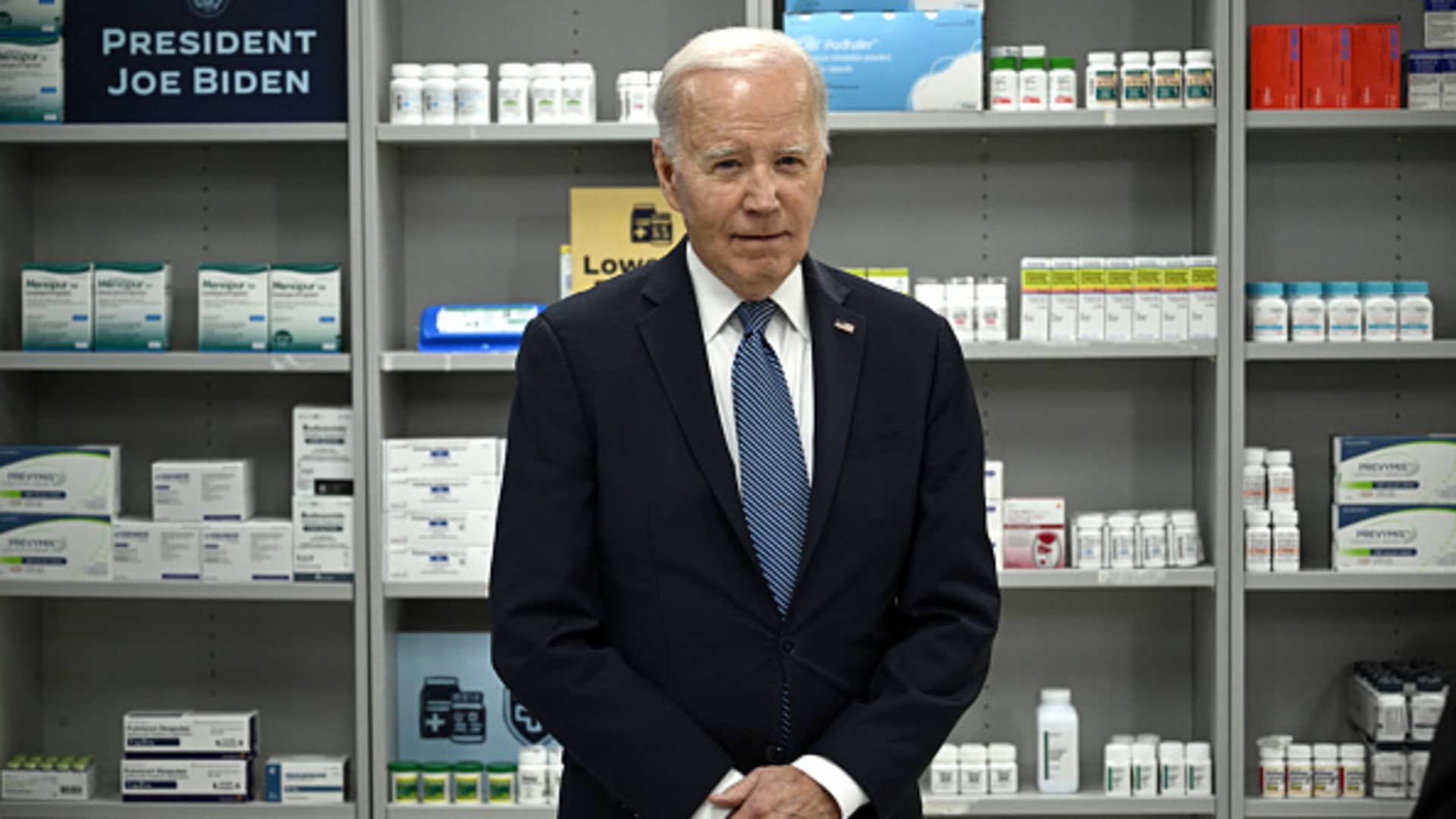
US President Joe Biden speaks during an event at the National Institutes of Health (NIH) in Bethesda, Maryland, US, on Thursday, Dec. 14 2023.
Chris Kleponis | Bloomberg | Getty Images
President Joe Biden on Wednesday said the federal Medicare program should negotiate prices for at least 50 prescription drugs each year, up from the current target of 20 medicines.
That’s one of several new health-care policy proposals that Biden will outline during his State of the Union address on Thursday, according to a fact sheet released by the White House on Wednesday. Many of those efforts aim to expand parts of the Inflation Reduction Act that are geared toward making medicines more affordable for seniors and could take a bite out of the pharmaceutical industry’s profits.
“Medicare should not be limited to negotiating just 20 drugs per year. Instead, the President is proposing that Medicare be able to negotiate prices for the major drugs that seniors rely on, like those used for treating heart disease, cancer, and diabetes,” the fact sheet read.
Biden has made lowering U.S. drug prices a key pillar of his health-care agenda and reelection platform for 2024. But the fate of his new proposals will sit in the hands of a divided Congress, making it highly uncertain if they will pass into law.
The president’s call to raise the number of drugs eligible for negotiations with Medicare will likely face the fiercest blowback from the pharmaceutical industry.
The Biden administration is already in a bitter legal fight with several drugmakers over the talks. The administration clinched early wins in two separate cases over the matter this year, but the industry is aiming to escalate the issue to the Supreme Court.
The Centers for Medicare and Medicaid Services kicked off the negotiation process last fall when it unveiled the first 10 drugs that are subject to price talks with Medicare. The negotiations for those medications end this fall, with new prices going into effect in 2026.
After the initial round of talks, Medicare can negotiate prices for another 15 drugs that will go into effect in 2027 and an additional 15 beyond that to take effect in 2028. Under the current structure, the number rises to 20 negotiated medications a year starting in 2029.
Last year, Biden indicated that he wanted more drugs to be subject to negotiations. Wednesday is the first time his administration has specified a higher target number.
The change will “not only save taxpayers billions of dollars, but more importantly, it will save lives and give seniors critical breathing room that they need,” said Neera Tanden, who serves as the president’s domestic policy advisor, during a call with reporters on Wednesday.
The president’s budget cuts federal spending by $200 billion, the White House fact sheet noted. That could increase the number of drugs that Medicare could select for negotiation and bring more medicines to the negotiation process sooner.
The White House did not disclose whether the number of drugs should gradually rise to 50 after several years, or if that new number would apply starting in 2029. A senior administration official told reporters on Wednesday that the president looks forward to working with Congress on the details of the proposal.
“We have built a system that we are confident is working and will deliver lower prices for the American people, and we believe we can scale that up,” the administration official said.
Among the other policy proposals are measures to cap Medicare copayments at $2 for common generic drugs and to extend the $2,000 cap on out-of-pocket drug costs beyond Medicare to all private plans.
Biden also wants to expand another provision of the Inflation Reduction Act that requires drugmakers to pay rebates to Medicare when their drug prices rise faster than inflation. The president wants that policy to apply to commercial drugs, not just medicines sold to Medicare.


