


SINGAPORE — Shares in Asia-Pacific fell in Tuesday morning trade after the S&P 500 fell overnight and closed in bear market territory.
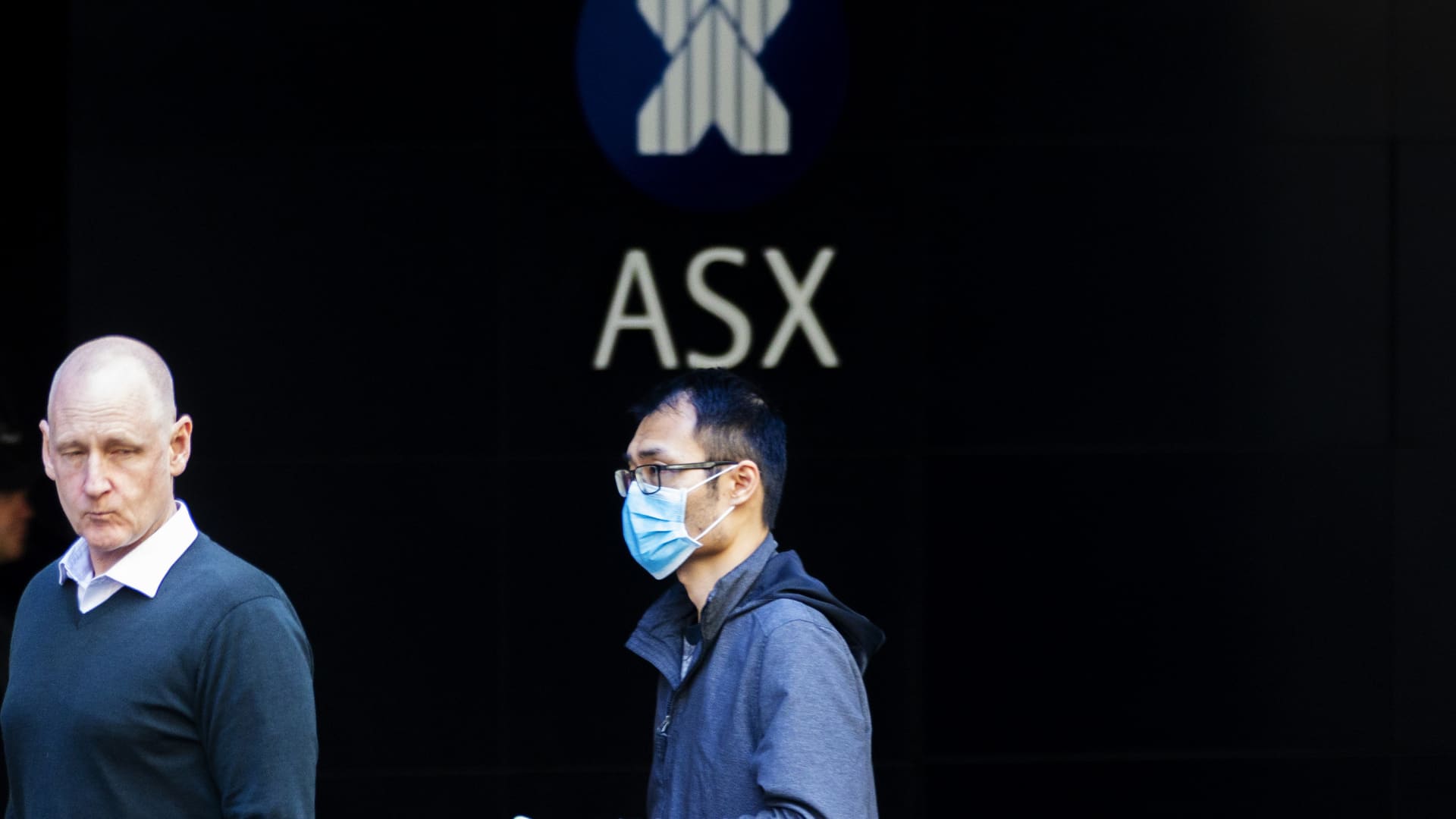
Australia’s S&P/ASX 200, which returned to trade Tuesday following a holiday yesterday, plunged about 5% and led losses among the region’s major markets.
The Nikkei 225 in Japan fell 2% while the Topix index declined 1.7%. South Korea’s Kospi dipped 1.26%.
MSCI’s broadest index of Asia-Pacific shares outside Japan traded nearly 1% lower.
Risk assets have plummeted with recession risk rising given the surge in yields and expectations of the Fed doing a Volcker
Tapas Strickland
Director of Economics, National Australia Bank
The S&P 500 fell nearly 4% overnight to 3,749.63, closing in bear market territory, or down more than 20% from its January peak.
Other major indexes stateside also saw big declines. The Dow Jones Industrial Average dropped 876.05 points, or 2.79%, to 30,516.74. The tech-heavy Nasdaq Composite lagged, plunging 4.68% to around 10,809.23.
The losses on Wall Street came as investors braced for a potentially faster pace of interest rate hikes by the U.S. Federal Reserve following Friday’s hotter-than-expected consumer inflation report.
Fed policymakers are now contemplating the idea of a 75-basis-point rate increase later this week, according to CNBC’s Steve Liesman. That’s bigger than the 50-basis-point hike many traders had come to expect. The Wall Street Journal reported the story first.
“Risk assets have plummeted with recession risk rising given the surge in yields and expectations of the Fed doing a Volcker,” Tapas Strickland, director of economics at National Australia Bank, said in a note on Tuesday.
In the early 1980s, former Fed Chief Paul Volcker helped tame inflation by raising benchmark interest rate to close to 20% and sent the economy into recession.
“If the Fed hikes by 75bps that will be a true Volcker moment and underscore front loading, a 50bp hike in contrast would cement the likelihood of 50bp hikes at every meeting for the rest of the year,” Strickland said.
The yield on the benchmark 10-year Treasury note recently saw its biggest move since March 2020, last standing at 3.3713%. The 2-year rate also saw a big jump and is currently trading at 3.3898%. Yields move opposite to prices, and a basis point is equal to 0.01%.
The 2-year rate now sits higher than the 10-year Treasury yield, representing an inversion – a measure closely watched by traders and often viewed as a potential indicator of recession.
Currencies
The U.S. dollar index, which tracks the greenback against a basket of its peers, was at 105.128 — continuing a general upward trek after last week’s climb from levels below 102.6.
The Japanese yen traded at 134.12 per dollar, stronger as compared with levels above 135 seen against the greenback yesterday. The Australian dollar was at $0.6946 after yesterday’s fall from above $0.70.