


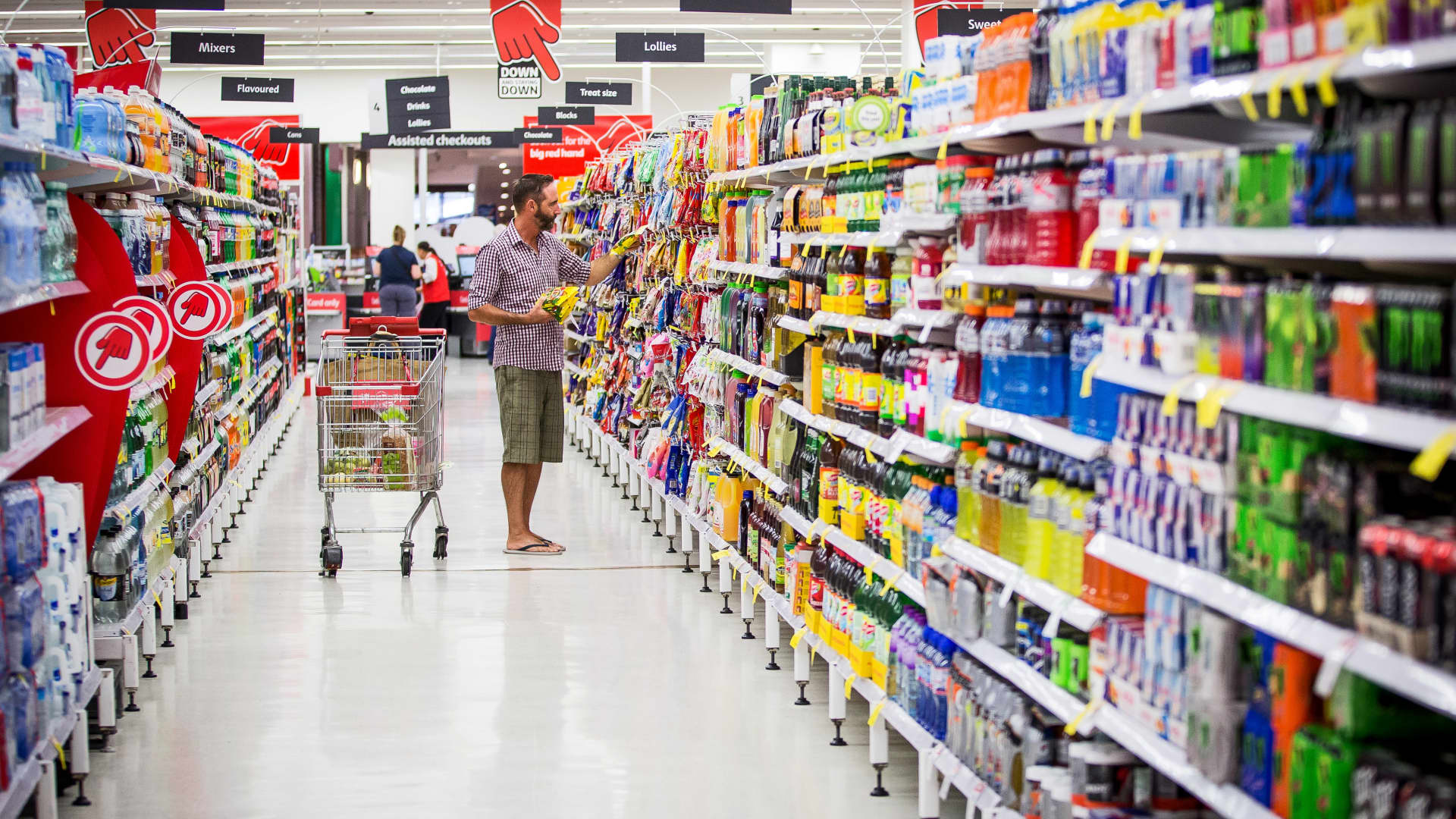
Australia’s consumer price index jumped 2.1% for the first quarter in 2022, with prices of food, petrol and other consumer goods all surging.
Ian Waldie | Bloomberg | Getty Images
Australia hiked its interest rate for the first time in more than a decade, a widely expected move as consumer prices surge.
Its central bank said Tuesday that the cash rate will be increased by 25 basis points to 0.35% — the first rate hike since November 2010.
Philip Lowe, governor of the Reserve Bank of Australia, said it is the right time to begin withdrawing some of the “extraordinary monetary support” that was put in place to help the Australian economy during the pandemic.
“The economy has proven to be resilient and inflation has picked up more quickly, and to a higher level, than was expected,” Lowe said in a statement. “There is also evidence that wages growth is picking up. Given this, and the very low level of interest rates, it is appropriate to start the process of normalising monetary conditions.”
The hike was more than the analyst estimate for 15 basis points to 0.25%, according to the median forecast of a Reuters poll of 32 economists.
Analysts had widely expected the central bank to hike rates, given the rapid rise in inflation. Prices of food, petrol and other consumer goods were all up in the last quarter.
Australia’s consumer price index jumped 2.1% for the first quarter, exceeding expectations of a 1.7% increase, data showed last week. On an annual basis, consumer inflation rocketed 5.1% — the highest since 2001 and higher than expectations for a 4.6% increase.
Lowe acknowledged in his statement that inflation had picked up more than expected, though it remains lower than in most other advanced economies.
“This rise in inflation largely reflects global factors. But domestic capacity constraints are increasingly playing a role and inflation pressures have broadened, with firms more prepared to pass through cost increases to consumer prices,” he said.
A further increase in prices is expected in the near term, but as supply side disruptions are resolved, Lowe said inflation is expected to decline back toward the country’s target range of between 2% to 3%.
The outlook for Australia’s gross domestic product also “remains positive” and is forecast to grow by 4.25% over 2022 and 2% next year, Lowe said. However, he noted there were uncertainties that may hit the global economy, such as the Russia-Ukraine war and Covid disruptions in China.
This is breaking news. Please check back for updates.
