


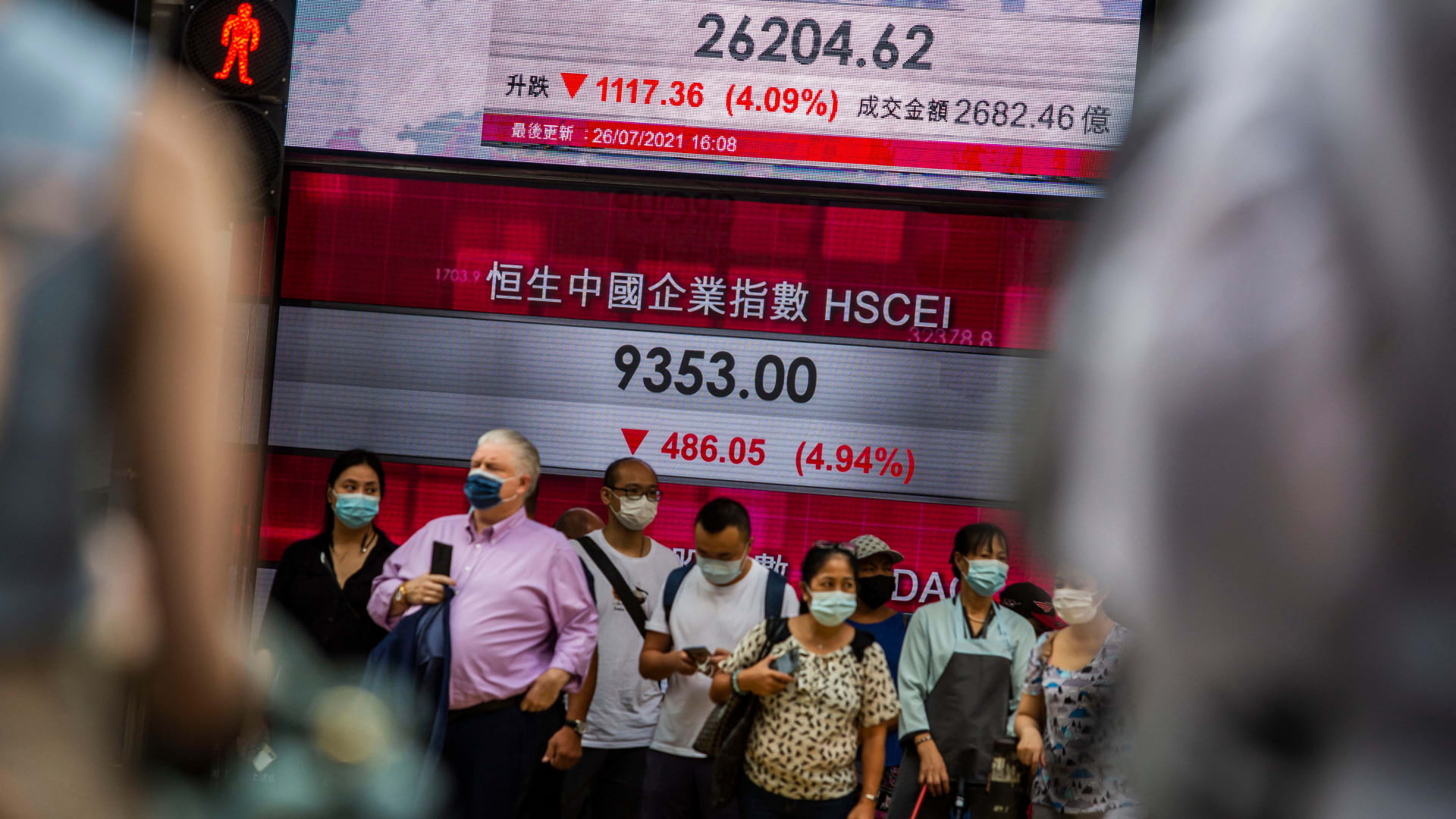
People standing in front of an electronic display showing the Hang Seng Index in the Central district of Hong Kong on July 26, 2021, after stocks plunged as tuition firms were hammered by China’s decision to reform the private education sector by preventing them from making profits.
Isaac Lawrence | AFP | Getty Images
Asia-Pacific markets fell on Wednesday as investors brace themselves for U.S. President Donald Trump’s country-specific tariffs that are set to come into effect midnight stateside.
Australia’s S&P/ASX 200 slid 1.06%.
Japan’s Nikkei 225 lost 3.14% at the open, while the Topix traded 3.26% lower. South Korea’s Kospi edged 0.18% lower while the small-cap Kosdaq lost 0.44%.
Hong Kong’s Hang Seng index futures were at 19,300 also weaker than the HSI’s last close of 20,127.68.
Additional tariffs will take effect just after U.S. midnight, adding to the 10% baseline duty that was already implemented on Saturday. Chinese goods will now face a cumulative tariff rate of 104%, the White House confirmed.
Investors will also be keeping an eye out for Reserve Bank of India’s decision later in the day. India’ central bank is expected to deliver a second straight rate cut today, according to economists polled by Reuters, which will bring its policy rate to 6%.
Overnight in the U.S., the three major averages closed lower. The Dow Jones Industrial Average dropped 320.01 points, or 0.84%, and closed at 37,645.59, bringing its four-day loss on tariff angst to more than 4,500 points. Apple led the losses with the iPhone maker’s costs set to surge with new China tariffs.
The S&P 500 declined 1.57% to end at 4,982.77. The index was inches away from closing in a bear market, down nearly 19% from its February record, and it ended the session below 5,000 for the first time since April 2024. Over the past four days, the S&P 500 has fallen more than 12%.
— CNBC’s Hakyung Kim and Sean Conlon contributed to this report.