


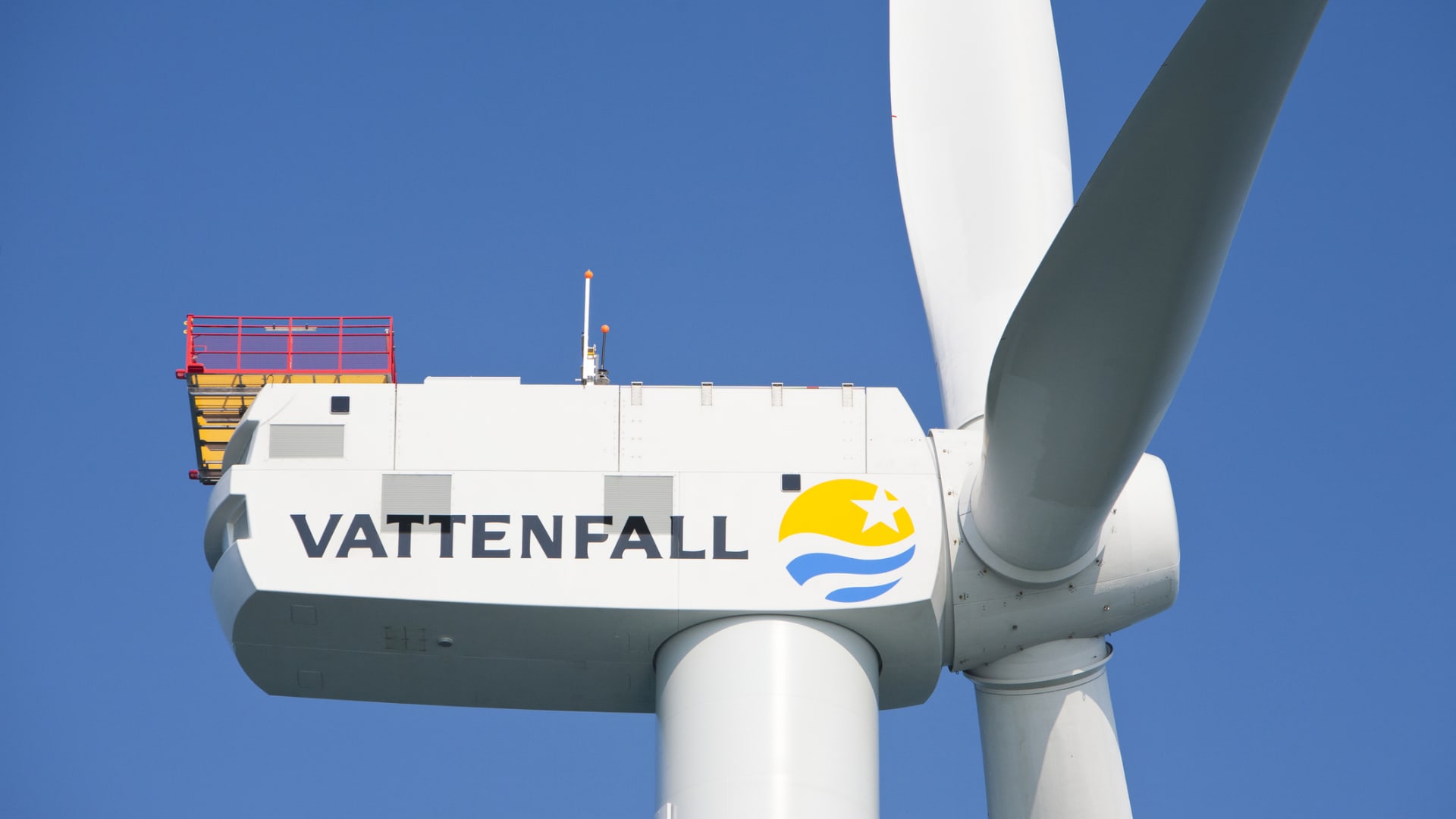
A wind turbine at the Ormonde Offshore Wind Farm, in the Irish Sea. With governments around the world attempting to ramp up their renewable energy capacity, the number of wind turbines worldwide only looks set to grow, which will in turn increase pressure on the sector to find sustainable solutions to the disposal of blades.
Ashley Cooper | Corbis Documentary | Getty Images
A major offshore wind farm being built in waters off the Netherlands is set to use recyclable blades from Siemens Gamesa Renewable Energy — the latest in a line of companies attempting to tackle an issue that’s proved to be a challenge for the wind energy sector.
In a statement Thursday, Swedish energy firm Vattenfall said some of the wind turbines at the 1.5 gigawatt Hollandse Kust Zuid facility would use Siemens Gamesa’s RecycableBlades. These blades, Vattenfall said, use “a resin type that dissolves in a low-temperature, mildly acidic solution.”
That, it explained, enables the resin to be separated from other components within the blade — carbon fiber, wood, fiberglass, metal and plastic — “without significantly impacting their properties.” The components can then be recycled and used again.
Offshore construction on Hollandse Kust Zuid, which will use 140 wind turbines, began in July 2021. It is jointly owned by Vattenfall, Allianz and BASF and commissioning is planned for 2023.
Industry headache
The issue of what to do with wind turbine blades when they’re no longer needed is a headache for the industry. That’s because the composite materials that blades are made from can be difficult to recycle, which means that many end up in landfills when their service life ends.
With governments around the world attempting to ramp up their renewable energy capacity, the number of wind turbines worldwide only looks set to grow, which will in turn increase pressure on the sector to find sustainable solutions to the disposal of blades.
Vattenfall is one of several companies looking into recycling and reusing wind turbine blades — an aim that feeds into the idea of creating a “circular economy” in which waste is minimized and products repurposed and reused.
Earlier in June, Spanish energy firm Iberdrola said it had jointly established a company with FCC Ambito that plans to recycle components used in renewable energy installations, including wind turbine blades. FCC Ambito is a subsidiary of FCC Servicios Medio Ambiente.
In a statement at the time, Iberdrola said the company, known as EnergyLOOP, would develop a blade recycling facility in Navarre, northern Spain.
“The initial objective will be the recovery of wind turbine blade components — mostly glass and carbon fibres and resins — and their reuse in sectors such as energy, aerospace, automotive, textiles, chemicals and construction,” the company said.

