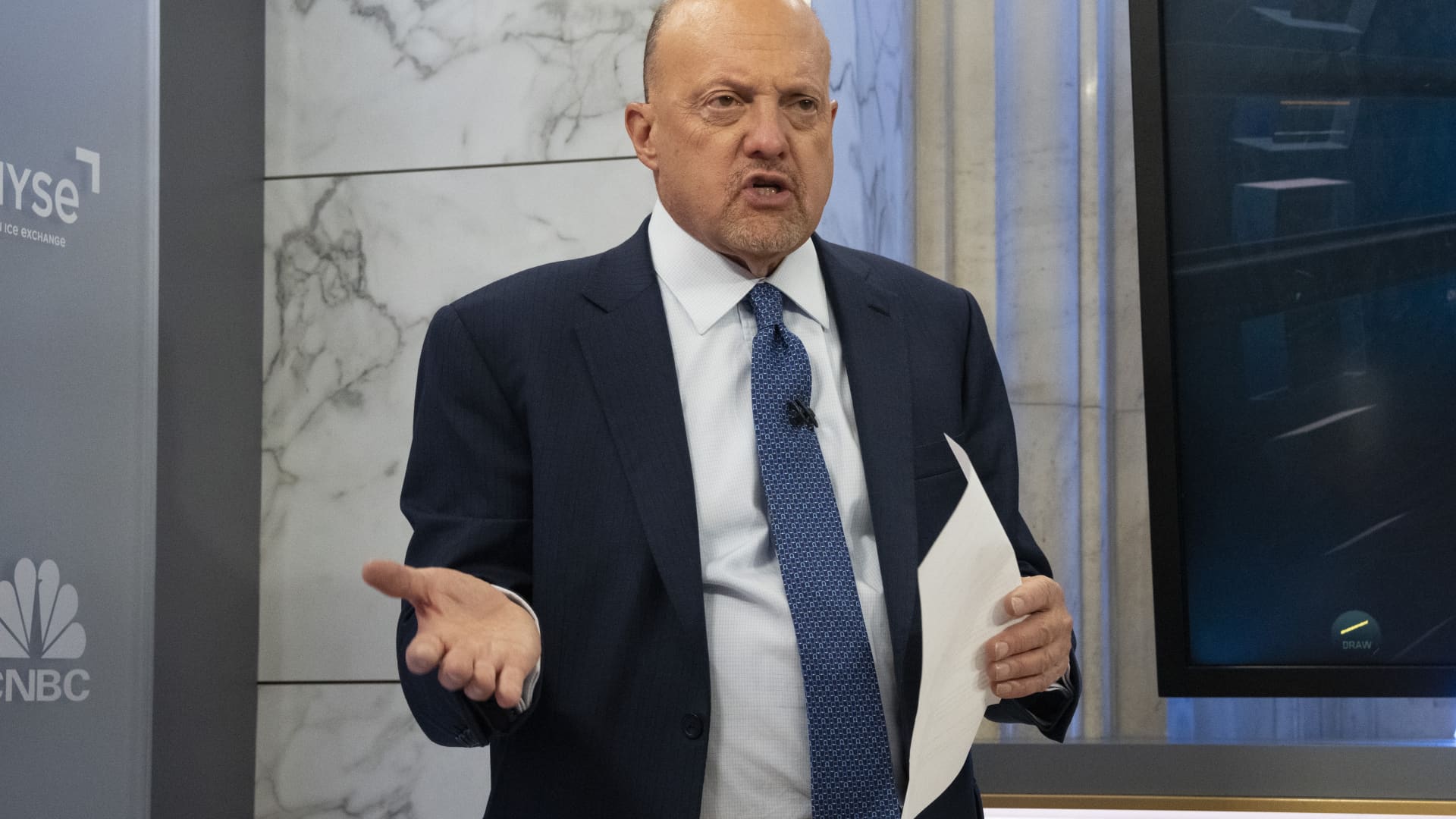
Nvidia CEO Jensen Huang said Wednesday that the U.S. is “not far ahead” of China in the artificial intelligence race, and that the country needs a “nuanced strategy” to stay on higher ground.
Huang has been walking a tense line between the two countries and has praised China’s AI models, including DeepSeek, Alibaba, and Baidu. Although U.S. models remain more advanced, China’s open-source models are “well ahead,” Huang said.
The CEO courted China in July with several trips following U.S. chip restrictions and warned that Chinese chip systems from companies like Huawei should not be discounted.
President Donald Trump spoke to Chinese President Xi Jinping on a call in September and announced plans for the pair to meet at the APEC South Korea summit at the end of October.
Here are five key things Huang said about the AI race on CNBC’s “Squawk Box.”
“China is well ahead of us on energy. We are way ahead on chips. They’re right there on infrastructure. They’re right there on AI models.”
Nvidia, widely regarded as the leading AI chip manufacturer, announced in September plans to invest up to $100 billion in OpenAI to build out AI data centers. However, these large investments in computing power require a massive amount of energy, which China far outpaces the U.S. in production.
China generated a total of 10,000 terawatt hours, or one trillion watt hours, of electricity in 2024, over double the U.S.’s output, according to the Energy Institute.
“Don’t forget that this is a country not without any chips. They have Huawei. They have really, really sophisticated and really entrepreneurial startups building AI chips.”
While the U.S. may be leading in advanced chip designs, including Nvidia’s Blackwell processor, China’s tech giant Huawei has been adding pressure with its plans to launch its new computing systems to power its in-house Ascend chips as soon as next year.
China reportedly prohibited tech companies from using Nvidia chips, instead focusing on advancing domestic chips to challenge Nvidia processors. Alibaba and Baidu reportedly began using internally designed chips to train AI models.
“The applications in China are advancing incredibly fast. This is an area that I’m quite concerned about.”
Huang said that China’s under-regulation at the industrial level makes the country “quick in adopting new technology.”
According to a China State Council directive, the country is aiming for AI adoption to reach 70% of the population by 2027 by imbuing various agents and other applications across core industries.
“I hope that American companies in American society are going to be fast in adopting AI applications, because ultimately this industrial revolution wins at the AI application layer, at the diffusion layer,” Huang said.
“The Chinese market is large. They’ve got a billion users, and so it’s not a market that you could easily decide to walk away from if your ultimate goal is for America to win the AI race.”
China holds 50% of the world’s AI researchers and 30% of the technology market, Huang said.
The country’s stocks have seen a strong rally as confidence climbs in its chip progression and AI development. China’s market has seen a huge boom as tech companies see share prices grow over triple digits in the past year.
Alibaba stock rose by almost 180% year to date, while electronics giant Xiaomi saw shares increase by 125%.
“We are essentially isolating American technology into America and forfeiting and competing the rest of the world to everybody else.”
Huang pointed to developing the American tech stack to win AI developers and markets globally and warned the U.S. would fall behind if American technologies are not allowed to “diffuse and be proliferated around the world.”
The CEO referenced comments from White House AI advisor David Sacks about the tech landscape in five years.
“If America, the American tech stack, is 80% of the world, then we are doing a good job winning the AI race. If the United States is 20% of the world, then we’ve lost the AI race,” Huang said.
Huang also referred to companies like Azure, CoreWeave, and Anthropic AI as playing a key part in revolutionizing the entire tech stack.