


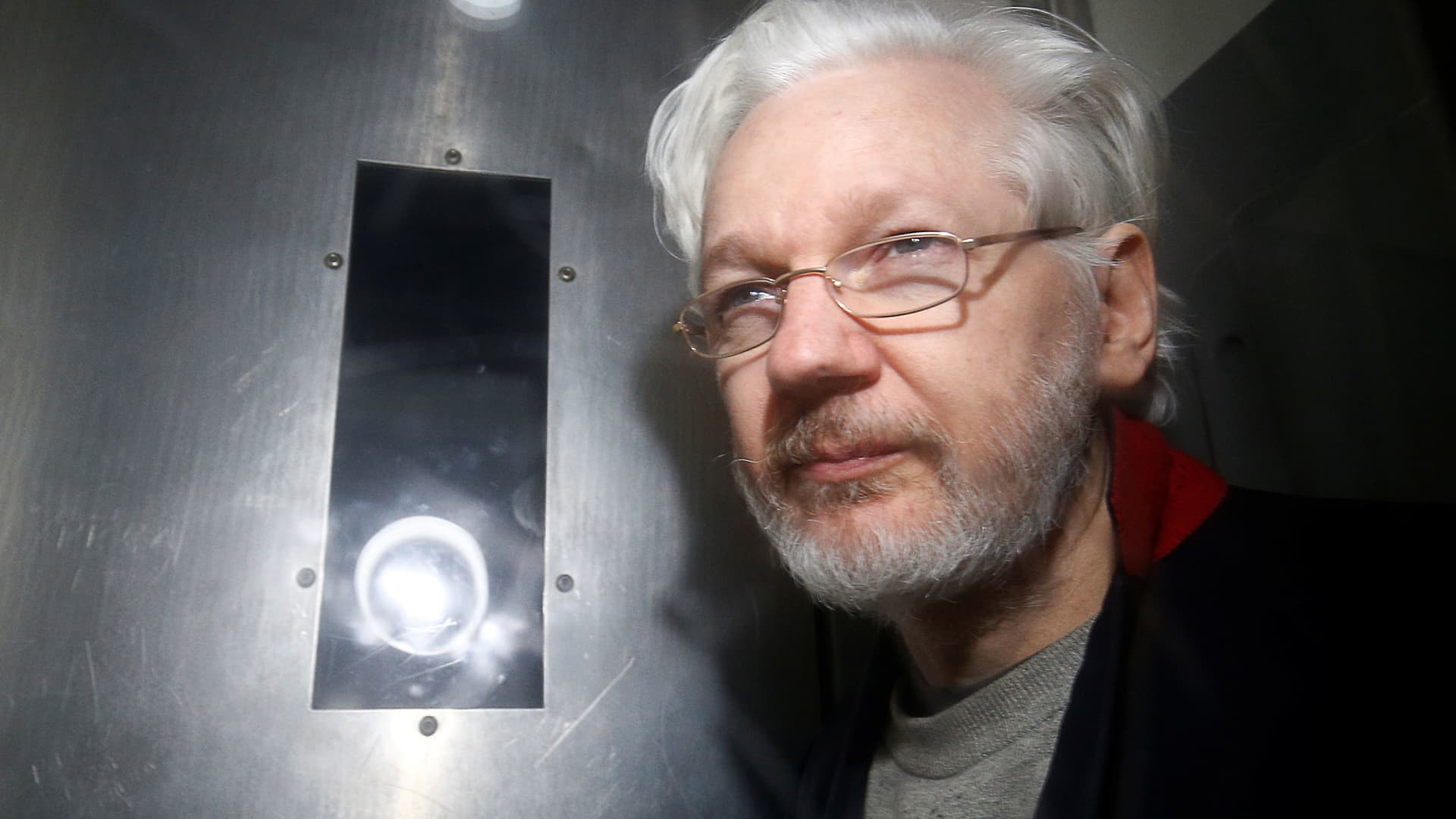
WikiLeaks’ founder Julian Assange leaves Westminster Magistrates Court in London, Britain.
Henry Nicholls | Reuters
The U.K. has approved the extradition of WikiLeaks founder Julian Assange to the U.S., where he is wanted over the publication of hundreds of thousands of classified military documents and diplomatic cables.
The deportation was approved Friday by U.K. Home Secretary Priti Patel following a series of failed legal battles in the U.K. courts. However, a number of appeal routes remain open to Assange, who has 14 days to appeal the decision.
Assange is wanted by U.S. authorities on 18 counts, including a spying charge, relating to WikiLeaks’ release in 2010 and 2011 of vast troves of confidential U.S. military records and diplomatic cables, which they claim had put lives in danger.
“On 17 June, following consideration by both the Magistrates Court and High Court, the extradition of Mr Julian Assange to the US was ordered. Mr Assange retains the normal 14-day right to appeal,” a U.K. Home Office spokesperson said.
“In this case, the UK courts have not found that it would be oppressive, unjust or an abuse of process to extradite Mr Assange. Nor have they found that extradition would be incompatible with his human rights, including his right to a fair trial and to freedom of expression, and that whilst in the US he will be treated appropriately, including in relation to his health.”
Friday’s extradition approval is the latest development in a years-long saga for Australian-born Assange. He has spent much of the last decade in confinement either in prison or in the Ecuadorian embassy in London. He is currently being held at high-security Belmarsh prison in London.
Wikileaks said on Twitter that it would appeal the decision, adding that it was a “dark day for Press freedom and British democracy.”
Assange’s supporters have long claimed that he is an anti-establishment hero whose prosecution was politically motivated because he exposed U.S. wrongdoing in conflicts in Afghanistan and Iraq.
The 50-year-old can appeal the decision at London’s High Court, which must give its approval for a challenge to proceed.
His case could ultimately reach the U.K. Supreme Court. However, if it is refused, he must be extradited within 28 days.
Assange’s lawyers have previously claimed that he could face a possible penalty of up to 175 years in prison if convicted in the U.S. However, the U.S. government said the sentence was more likely to be four to six years.


