


Owning isn’t always what it’s cracked up to be.
For many reasons — including affordability — more Americans are choosing to rent everything from cars and apartments to clothing and furniture these days, according to a report by Intuit Credit Karma.
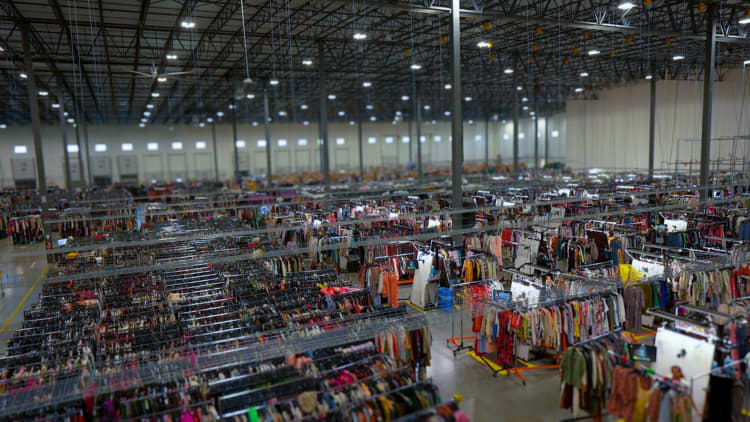
Far beyond the traditional tuxedo, the rental industry has expanded in recent years to include power tools, musical instruments, designer handbags, baby gear and even funeral caskets.
Now, 28% of adults routinely rent goods and services, Credit Karma found. However, when factoring in housing, that percentage jumps to 47%.
The growing share of renters is largely due to higher prices, although some people simply prefer renting over buying, opting for a “rent-first” lifestyle, according to the survey, which polled more than 2,000 adults in June.
More from Personal Finance:
‘Emotion-proof’ your portfolio ahead of the election
‘Recession pop’ is in: How music hits on economic trends
More Americans are struggling even as inflation cools
Aside from affordability concerns, more than half — 58% — of those polled said they find value in renting, because it allows for more flexibility and is a way to avoid overconsumption, which has become an increasing concern among millennial and Gen Z adults.
“Renting is a great option for many people,” said Carolyn McClanahan, a certified financial planner and founder of Life Planning Partners in Jacksonville, Florida. However, it always pays to do the math, she advised.
“Some people do great renting clothes and, for special events, this can be good,” said McClanahan, who also is a member of CNBC’s Advisor Council. “However, if you know you have a lot of special events, a few really good [owned] pieces can last a long time.”
Clothing prices have been hard hit by inflation. Since July 2020, men’s and women’s apparel prices are up 15% and 13.3%, respectively, according to the U.S. Bureau of Labor Statistics’ consumer price index.
Meanwhile, It may not make as much sense to lease a car, McClanahan said, “as that ends up being higher costs long-term.”
Although monthly lease payments tend to be lower than car loan payments, financing a car with a new or used auto loan usually ends up costing less than a lease in the long run, especially for consumers who hold onto vehicles for years.
Additionally, car lease agreements often come with routine service included in the terms, but the downside is there are also mileage limits and potential charges for wear and tear.
More importantly, car buyers will benefit from owning the vehicle outright at the end of a loan term, and have built equity in the asset.
To buy or rent a house in today’s market
Since housing costs are the biggest expense for most people, it may make sense to rent, at least initially.
“Unless you are absolutely sure you are dedicated to being in a home for at least five years, you should definitely rent,” McClanahan said. “Only when you are settled with life, jobs and family is when it probably makes sense to buy a home.”
Because millennials are more likely to postpone marriage and starting a family, they are able to cast a wider net when looking for place to live, or relocate for a job, if necessary, which makes renting more worthwhile.
“This generation is different,” said Dottie Herman, vice chair at Douglas Elliman. “They believe in homeownership but now there is a choice.”
According to Herman, “it’s not quite as important to them to own a house. A lot of them say, ‘I’ll rent, and I’ll think about it.'”
Of course, some Americans, especially young adults, are renting because they must.
Higher mortgage rates and a shortage of houses on the market relative to buyer demand have kept home prices elevated and created an affordability crunch for would-be buyers. Sometimes renting is the only option available.
Close to three-fourths of would-be homeowners said affordability is their greatest obstacle, according to a report by Bankrate. Among younger adults, 50% said homeownership is only achievable for the wealthy, Credit Karma also found.
Even though wealth creation has been concentrated amongst homeowners in recent years, often there is a pressure to buy, when it may not make financial sense, according to Michael Krowe, director of financial planning at Edelman Financial Engines.
“Don’t make a home purchase simply because you think it’s going to surge in value,” he said. “You might think your home is an investment — it’s not. Your home is a place to live.”
“Buy a home because you like the neighborhood, schools and proximity to friends and family,” Krowe said. There may be benefits to renting in this market, he added, particularly if it allows you to avoid stretching beyond your means.
Subscribe to CNBC on YouTube.
