




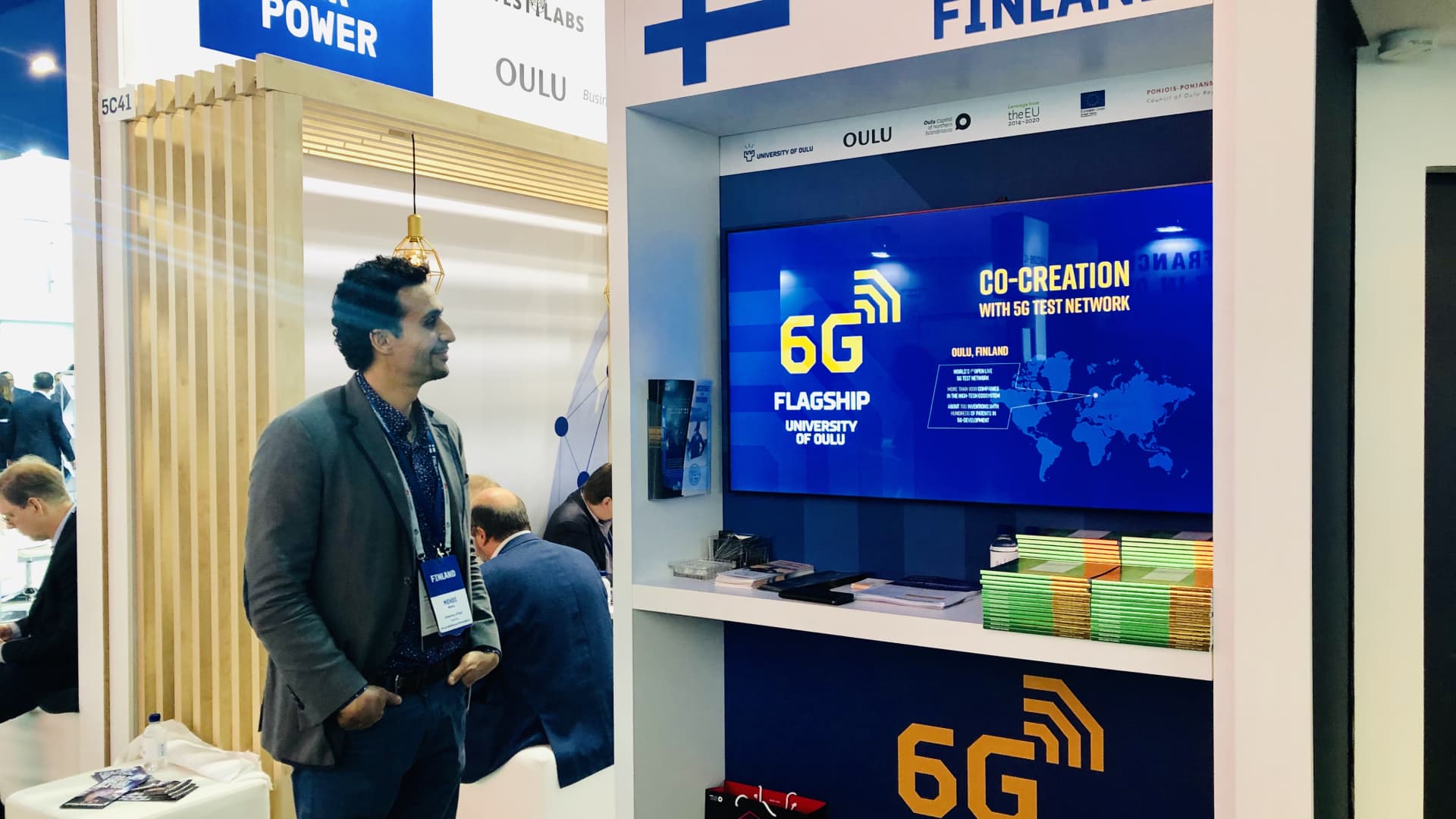
Mehdi Bennis is an associate professor at the University of Oulu in Finland researching 6G.
Elizabeth Schulze | CNBC
Nokia CEO Pekka Lundmark expects 6G mobile networks to be in operation by the end of the decade but he doesn’t think the smartphone will be the most “common interface” by then.
Speaking on a panel at the World Economic Forum in Davos Tuesday, Lundmark said he expects 6G to hit the commercial market around 2030.
Headquartered in Finland, Nokia builds telecoms networks that enable phones and other internet-enabled devices to communicate with one another.
Asked when he thinks the world will move away from using smartphones to using smart glasses and other devices that are worn on the face, Lundmark said it will happen before 6G arrives.
“By then, definitely the smartphone as we know it today will not anymore be the most common interface,” he said. “Many of these things will be built directly into our bodies.”
He did not specify exactly what he was referring to but some companies, such as Elon Musk’s Neuralink, are working on producing electronic devices that can be implanted into the brain and used for communication with machines and other people. On a more basic level, chips can be implanted into people’s fingers and used to unlock things.
Elsewhere, U.S. tech giants such as Meta, Google and Microsoft are working on new augmented reality headsets that could one day replace the smartphone.
Speaking on the same panel, Google CFO Ruth Porat said: “We believe that one of the big advantages of augmented reality is actually solving problems here on Earth.”
“It will be things like having glasses and being able to translate as you speak with glasses,” she added. “Those are very close.”
Google previously launched an AR headset called Google Glass but ultimately pulled it after the device failed to gain traction.
The tech leaders also discussed the opportunities and challenges that the metaverse presents.
By 2030, Lundmark said he believes there will be a “digital twin of everything” that will require “massive computational resources.”
In order to transmit all the computers bits that the metaverse will require, networks will need to be at least 100 times or even 1,000 times faster than they are today, Lundmark said.

