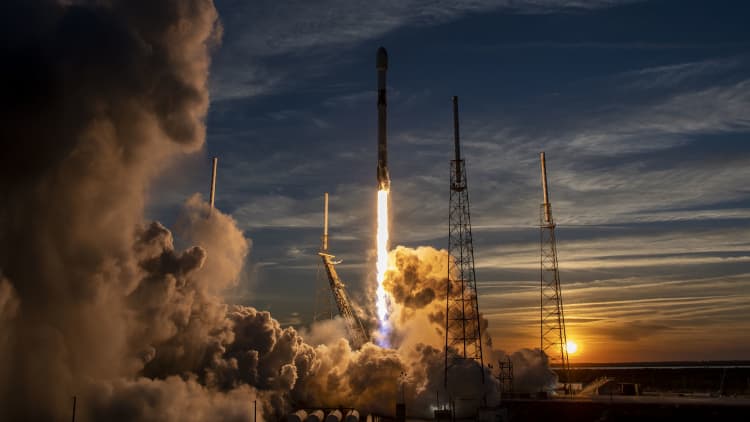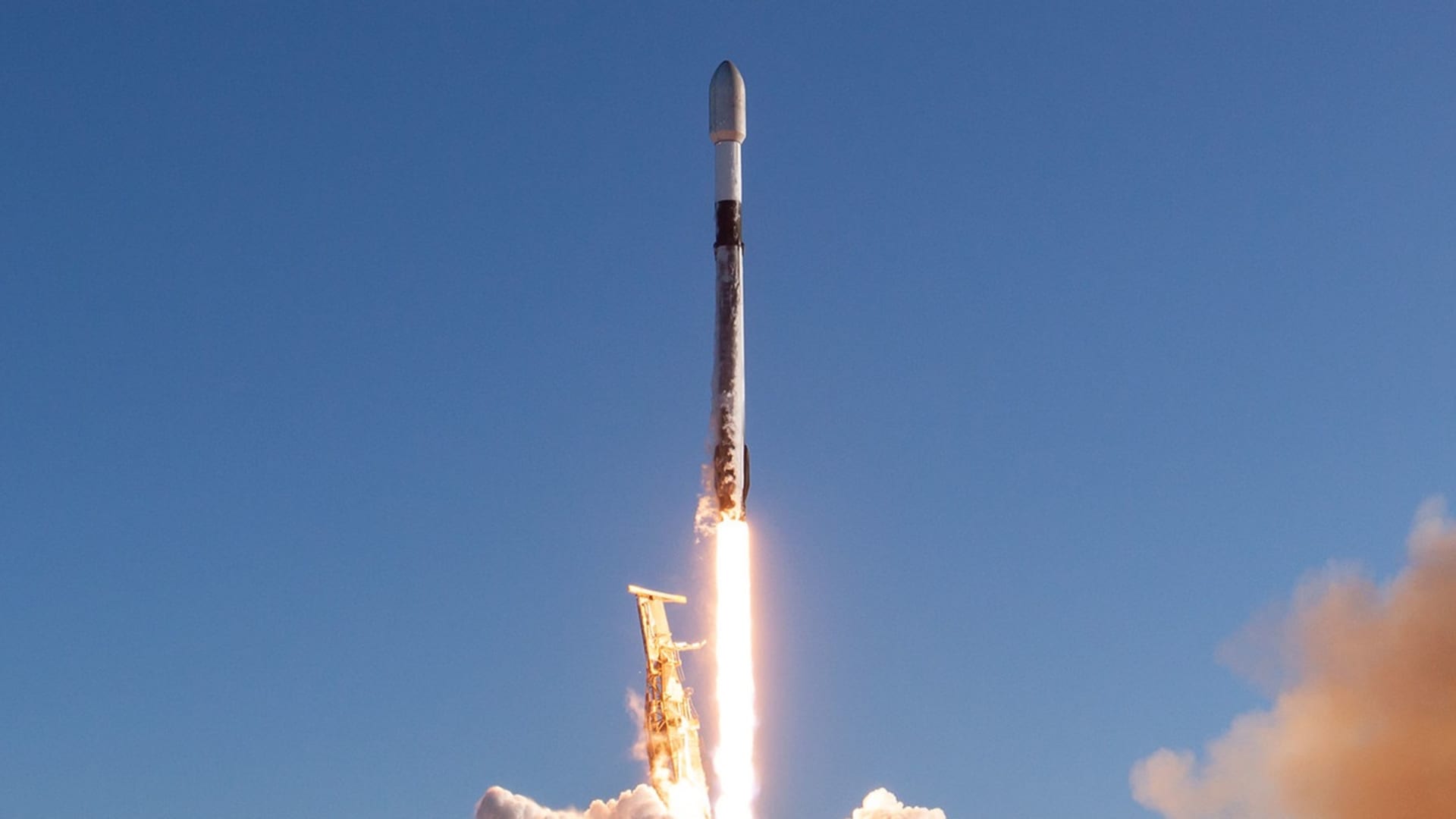
A Falcon 9 rocket launches a Starlink mission on January 31, 2023 from Vandenberg Space Force Base in California.
SpaceX
The Federal Aviation Administration has approved SpaceX to resume flights of its mainstay Falcon 9 rocket after a brief grounding, with Elon Musk’s company planning to launch its next mission carrying satellites as soon as Saturday.
The FAA clearance came just 15 days after the rocket suffered a rare inflight failure while in orbit during a launch of Starlink satellites.
“The FAA determined no public safety issues were involved” in the July 11 mishap, the regulator said in a statement to CNBC late Thursday, allowing the rocket to “return to flight operations while the overall investigation remains open.”
The hiatus was unusually brief following a flight failure, but SpaceX argued the rocket’s rapid launch pace – on average every two to three days this year – and “unprecedented levels of flight data” from nearly a decade of over 300 consecutive successful orbital launches supported a quicker return to service.
“Safety and reliability are at the core of SpaceX’s operations. It would not have been possible to achieve our current cadence without this focus,” the company wrote in a statement on its website on Thursday.
Sign up here to receive weekly editions of CNBC’s Investing in Space newsletter.
During the July 11 launch, the rocket’s lower first stage, or booster – powered by 9 engines – operated as expected before returning to land. But the rocket’s upper second stage, which has a single engine, failed to reignite as planned and was unable to complete its mission.
SpaceX traced the cause of the midflight failure to a tube known as a “sense line,” a part of the rocket’s system for liquid oxygen, one of the propellants used to power the engine of the second stage. A loose clamp for that tube and the intense vibration of the rocket’s engine led to cracking, the company said. That cracked sense line resulted in a leak of liquid oxygen, causing damage to the rocket’s engine when it attempted to restart in space.
The company said it would remove the tube and its related pressure sensor from the rocket’s upper stage engine “for near term” launches, noting that it is not a critical component for safety. The company plans to rely on alternative sensors in the meantime, as it’s currently testing a longer term design change under the FAA’s oversight.
“An additional qualification review, inspection, and scrub of all sense lines and clamps on the active booster fleet led to a proactive replacement in select locations,” SpaceX added.