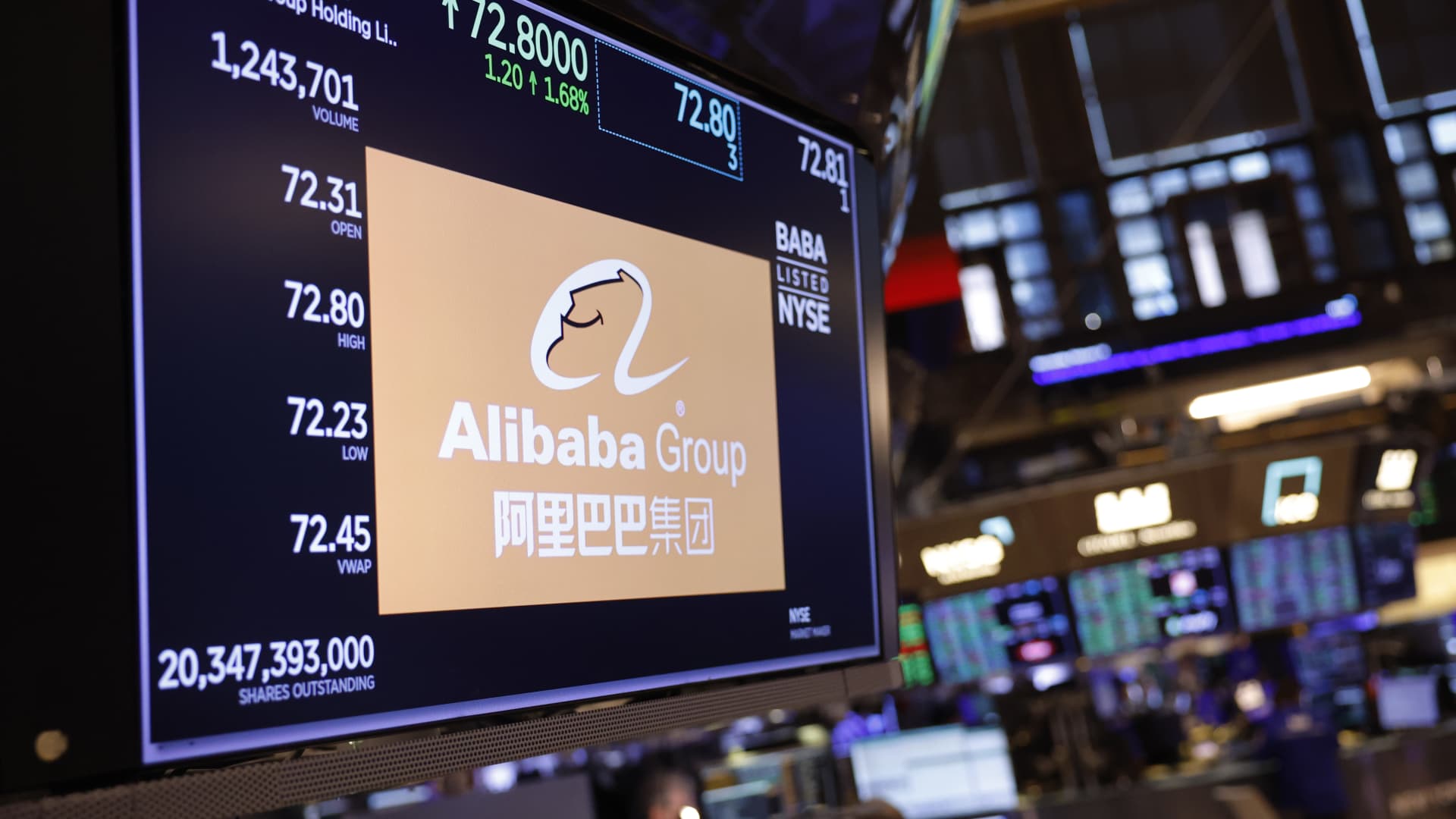
The Alibaba Team company brand is shown on a display at the New York Inventory Exchange in the course of early morning investing on February 14, 2024 in New York Town.
Michael M. Santiago | Getty Pictures
Alibaba on Tuesday claimed it was scrapping a prepared first community featuring for its clever logistics device Cainiao, including to current woes for the previous Chinese tech darling.
The shelving of the planned IPO — which would have been a boon to Alibaba, handing it an injection of dollars with a essential exit offer — arrives following deteriorating market problems in China.
Traders have soured on China of late, anxious by a litany of issues which includes softer usage, and a serious estate and debt disaster.
In a press release Tuesday, Alibaba mentioned that it was withdrawing its IPO and listing software for Cainiao, and would also get the remaining shares of the organization it does not already at present own.
As of around 6:50 a.m. ET, Alibaba’s American depositary receipt have been virtually unchanged in U.S. premarket buying and selling Tuesday.
Alibaba at this time owns a 64% stake in Cainiao. It says it intends to commit up to $3.75 billion to receive the remaining 36% from minority investors and workforce with vested equity.
Joe Tsai, Alibaba’s chairman, claimed in a assertion that the enterprise took the conclusion to pull its prepared IPO of Cainiao and in its place choose full possession of the business enterprise as “we consider this is an suitable time to double down” on investing in the logistics enterprise.
The offer you values Cainiao at $10.3 billion, Alibaba explained. Cainiao, which Alibaba 1st introduced in Might 2013, offers warehousing and fulfillment products and services, final-mile supply and decide on-up posts, and reverse logistics to customers of Alibaba’s Taobao and Tmall e-commerce sites.
Hong Kong, in which Alibaba and Chinese tech friends Tencent, Baidu and JD.com are listed, has not followed the identical upward trajectory as its U.S. and European peers.
In the earlier 12 months, Hong Kong’s Hang Seng index is down all over 15%. The U.S. Dow Jones Industrial Regular and the Euro Stoxx 600 indexes, on the other hand, are up a respective 21% and 15% each in excess of the same time period.
Tech stocks, in particular, have fared badly in China. Alibaba shares have dropped approximately 18% in the earlier 12 months. Tencent, Baidu, and JD.com are down 20%, 30%. and, 32%, respectively.