



Wholesale prices rose additional than anticipated in January, more complicating the inflation image, in accordance to a U.S. Office of Labor report Friday.
The producer value index, a evaluate of price ranges acquired by producers of domestic merchandise and products and services, rose .3% for the thirty day period, the most significant shift given that August. Economists surveyed by Dow Jones had been searching for an increase of just .1%. PPI fell .2% in December.
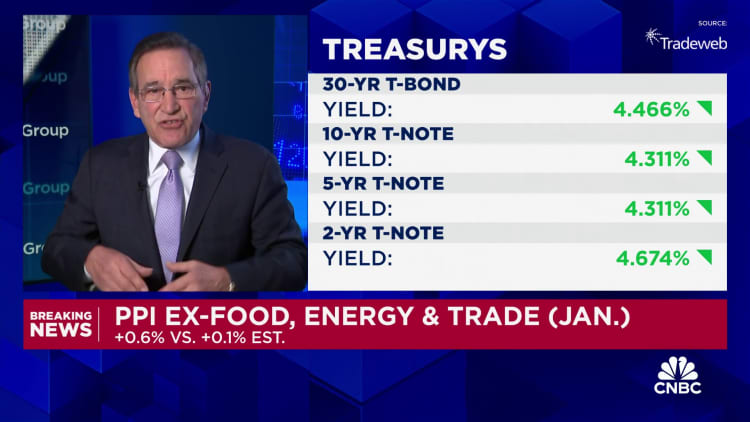
Excluding food and electricity, core PPI elevated .5%, also against anticipations for a .1% attain. PPI excluding food items, energy and trade products and services jumped .6%, its greatest one particular-month advance since January 2023.
The report arrives just times soon after the purchaser value index showed inflation keeping stubbornly better regardless of Federal Reserve anticipations for moderation by the yr. The CPI was up 3.1% from a yr in the past, down from its December level but still very well forward of the Fed’s aim for 2% inflation.
On a main foundation, which the Fed focuses on additional as a longer-term gauge of inflation, the CPI was up 3.9%. CPI differs from PPI in that it measures the selling prices shoppers essentially spend in the market.
Markets fell sharply right after Tuesday’s CPI reading, and there have been fears that a scorching PPI quantity also could induce a different jolt. Anticipations have been increasing substantial that the Fed would use the easing inflation figures as incentive to slice interest costs aggressively this calendar year, but traders have experienced to pare back again those expectations in current times as inflation has shown unexpected persistence.
Stock current market futures moved lower right after the PPI report and Treasury yields surged.
Just a several weeks in the past, marketplaces had been pricing in the very first Fed level lower in March. That since has been pared back again to June as policymakers have expressed caution about giving up the inflation combat too quickly when noting that an in any other case steady economy buys them time before obtaining to shift.
A .6% raise in last demand assistance aided propel the wholesale index higher, which in itself was boosted by a 2.2% rise in clinic outpatient treatment. Merchandise charges truly diminished .2% on the back again of a 1.7% decline in last demand electrical power as gasoline slid 3.6%.
On a 12-thirty day period foundation, headline PPI elevated just .9%, a little bit reduced than the 1% stage in December. Nevertheless, excluding food stuff, energy and trade services, the index rose 2.6%.
Alongside with the troublesome inflation readings, the Commerce Department described this 7 days that retail revenue in January slid by .8%, much extra than expected.
Don’t skip these tales from CNBC Professional: