


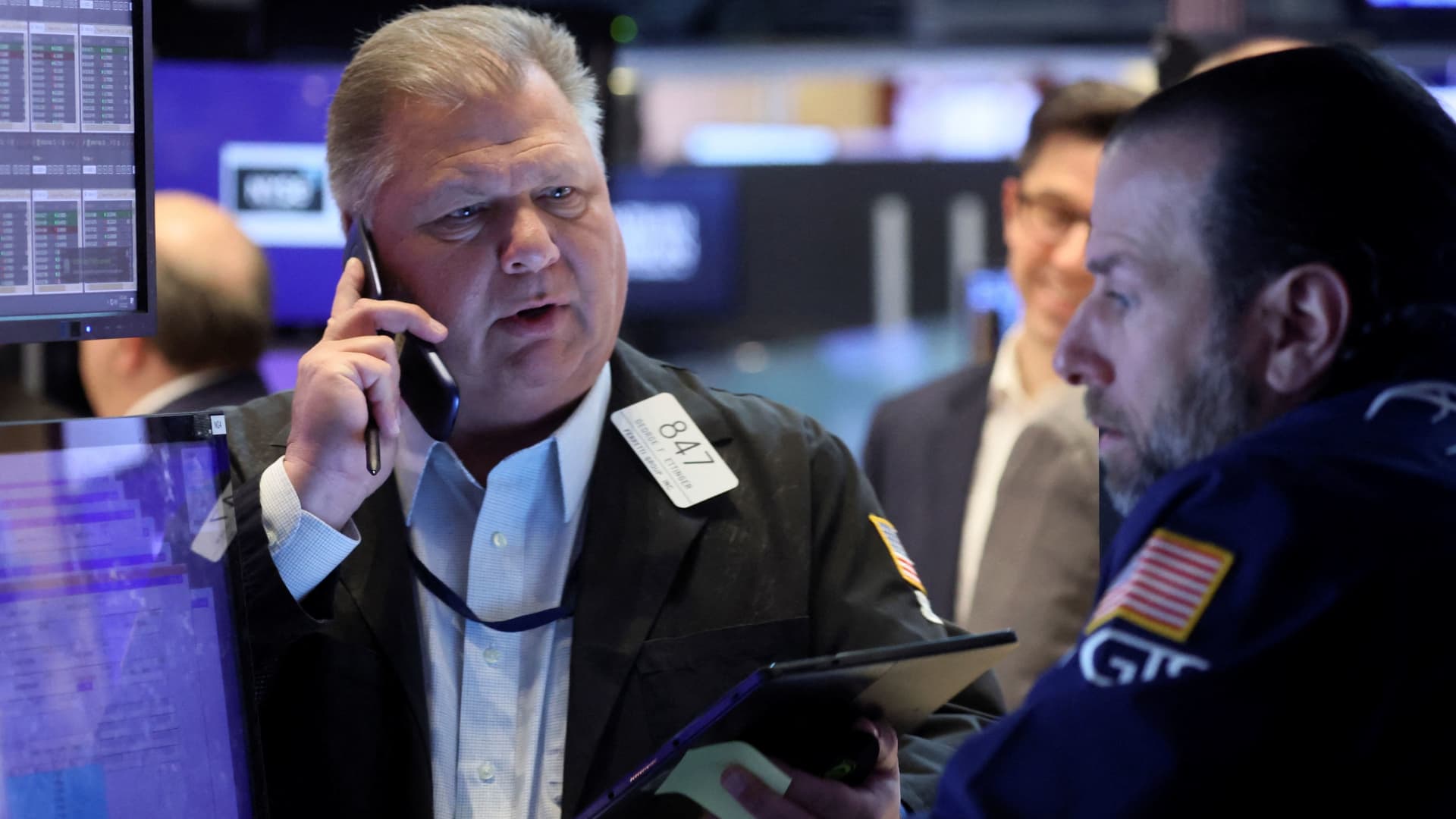
Traders work on the floor of the New York Stock Exchange (NYSE) in New York, May 9, 2022.
Brendan McDermid | Reuters
Goldman Sachs is scaling back its business in the once red-hot SPACs as blank-check deals got caught in a double whammy of regulatory crackdown and tough market environment.
“We are reducing our involvement in the SPAC business in response to the changed regulatory environment,” Maeve DuVally, a spokeswoman for Goldman, told CNBC.
Bloomberg News first reported on Goldman’s moves earlier Monday. The outlet reported that Goldman is terminating its involvement with some sponsors, while pausing new issuance, citing people familiar with the matter.
The Securities and Exchange Commission in March introduced a host of new rules for SPACs that would mark one of the broadest attempts to date at cracking down on blank-check companies. The proposed rules would amend safe harbor rules and leave SPACs open to investor lawsuits if they feel like the estimates were wildly rosy.
The so-called safe harbor protection allows some blank-check companies to make bullish forward-looking statements about the firms they plan to merge with.
“Part of the attractiveness to the SPAC market and what differentiates SPACs from IPOs is the safe harbor protection,” said Perrie Weiner, partner at Baker McKenzie LLP.
“You are not usually going public by a de-SPAC M&A if you are a company that’s been around a long time with a long earnings track record. It’s usually a younger company that doesn’t quite have the same track record but has a lot of promise in the future,” Weiner said. “The SEC is trying to curtail that. From an underwriter’s perspective, the big ones are going to be a little bit more concerned about downside protection to avoid the liability.”
Meanwhile, SPACs — which are often speculative stocks with little earnings — have been crushed this year in the face of rising rates as well as elevated market volatility. The proprietary CNBC SPAC Post Deal Index, which is comprised of SPACs that have completed their mergers and taken their target companies public, has tumbled more than 40% year to date.
“SPACs” is short for special purpose acquisition companies, which raise capital in an initial public offering and use the cash to merge with a private company and take it public, usually within two years.
After a year of issuance explosion in 2021, there are now more than 600 SPACs searching for an acquisition target, according to SPAC Research. As the market environment turned rough, some announced deals failed to make it to fruition. Many sponsors have been forced to scrap their proposed deals, sometimes even before the SPACs got listed.


