


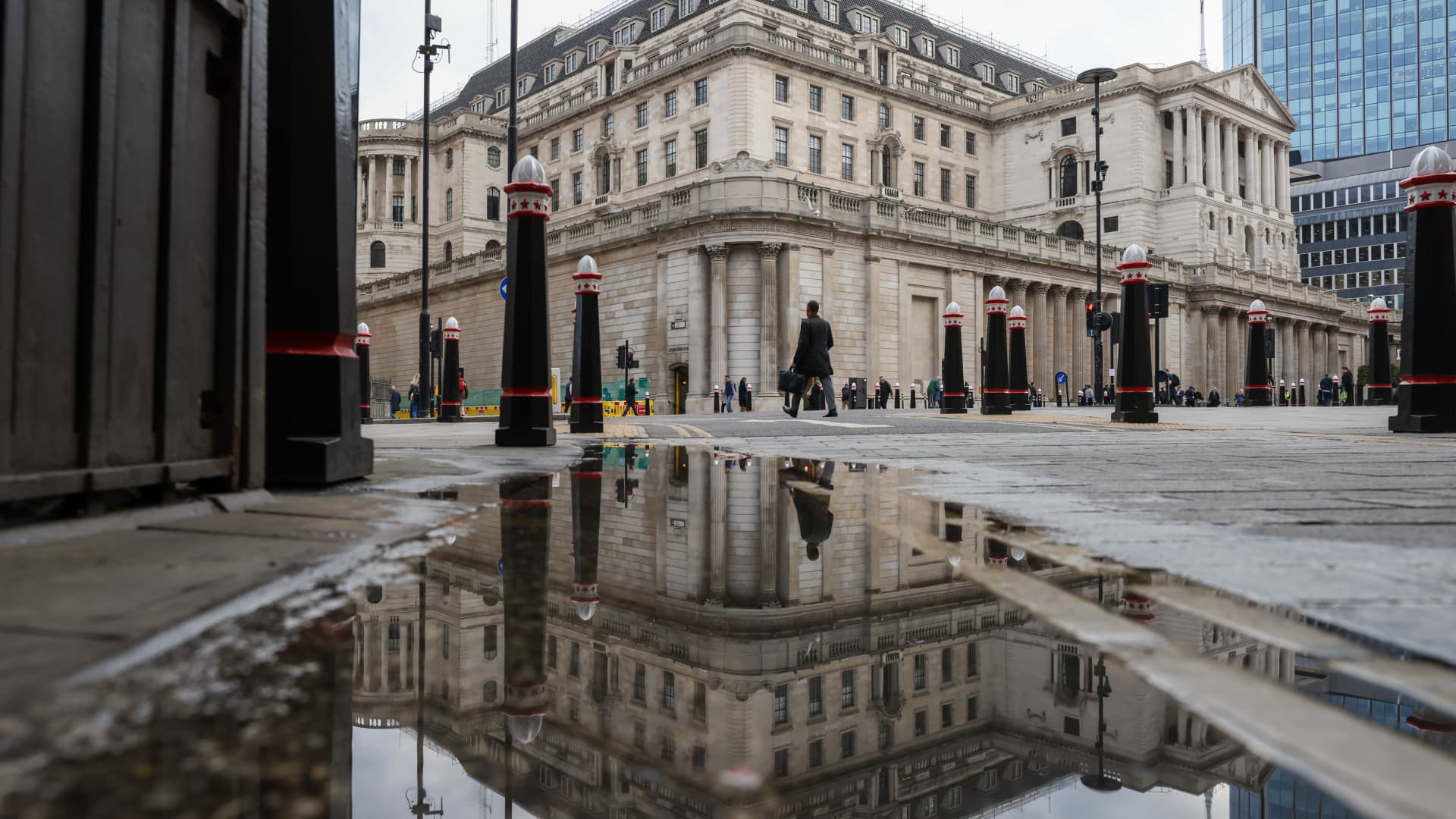
BOE Governor Andrew Bailey has warned the Bank is walking a “narrow path” between growth and inflation.
Bloomberg | Bloomberg | Getty Images
LONDON — The Bank of England on Thursday raised interest rates to their highest level in 13 years in a bid to tackle soaring inflation.
In a widely expected move, policymakers at the BOE voted for a fourth consecutive rate hike since December at a time when millions of U.K. households are grappling with skyrocketing living costs.
The Bank’s Monetary Policy Committee approved a 25-basis point increase by a majority of 6-3, taking the base interest rate up to 1%. The Bank said the members in the minority preferred to increase interest rates by 0.5 percentage points to 1.25%.
Like many central banks around the world, the BOE is tasked with steering the economy through an inflation surge that has been exacerbated by Russia’s unprovoked onslaught in Ukraine.
Annual U.K. inflation hit a 30-year high of 7% in March — more than three times the BOE’s target level — as food and energy prices continue to surge. U.K. consumer confidence, meanwhile, plunged to a near record low in April amid fears of slowing economic growth.
The Bank expects U.K. inflation to rise to roughly 10% this year as a result of the Russia-Ukraine war and lockdowns in China. It has also warned prices are likely to rise faster than income for many people, deepening the cost of living crisis.
Sterling hit a low of 1.2393 against the dollar on Thursday afternoon London time, the lowest level since Jul. 1, 2020. The U.K. currency was last seen trading at $1.2405, down more than 1.7%.
“Global inflationary pressures have intensified sharply following Russia’s invasion of Ukraine,” the Bank’s MPC said. “This has led to a material deterioration in the outlook for world and UK growth.”
‘A very narrow path’
“The point being is we are walking this very narrow path now,” Governor Andrew Bailey said at a press conference when asked why the Bank had taken its decision to raise rates.
“The proximate reason for raising [the] bank rate at this point is not only the current profile of inflation and what is to come and of course what that could mean for inflation expectations to come — but the risks as well,” Bailey said.
The BOE chief had previously said the Bank may look to take a more incremental approach to tightening rather than following the U.S. Federal Reserve with a 50-basis point hike.
The U.S. central bank on Wednesday raised its benchmark interest rate to a target rate range of between 0.75% and 1%. It marked the Fed’s biggest rate hike in two decades and its most aggressive step yet in its fight against a 40-year high in inflation.
In its updated forecasts, the Bank highlighted the looming recession risk for the world’s fifth-largest economy. The BOE said it now expects gross domestic product to contract in the final three months of the year, partly reflecting the projected large hike in household energy bills in October.
It is at this time that the Bank also sees U.K. inflation reaching its peak of 10.2% — the highest level since 1982.
“UK GDP growth is expected to slow sharply over the first half of the forecast period,” the Bank said. “That predominantly reflects the significant adverse impact of the sharp rises in global energy and tradable goods prices on most UK households’ real incomes and many UK companies’ profit margins.”
‘Autopilot mode’
“The combination of slower growth and higher inflation is a challenge for many policymakers, and is reflected in today’s split vote,” said Hussain Mehdi, macro and investment strategist at HSBC Asset Management.
“However, with inflation set to remain higher for longer in 2022, MPC policy tightening remains in autopilot mode amid concerns over second round effects from tight labour markets,” Mehdi said.
“Looking ahead, energy prices and China lockdowns are key risk factors, but scope for inflation to cool later this year and the impact of a significant household income squeeze on growth could eventually push the bank on a more dovish path,” they added.
“In my view, the combination of the pandemic and Brexit has changed the fundamentals of the UK economy – particularly its ability to generate persistent inflation,” said Karen Ward, chief EMEA market strategist at JPMorgan Asset Management.
“The Bank will have to keep raising rates to bring inflation down, but a gradual approach, as taken today, is understandable given the nature of the current risks,” Ward said.
“If post-pandemic pent-up demand continues to overwhelm the headwind of higher prices, then demand will remain resilient. In which case the BoE still has some way to go in this hiking cycle.”