


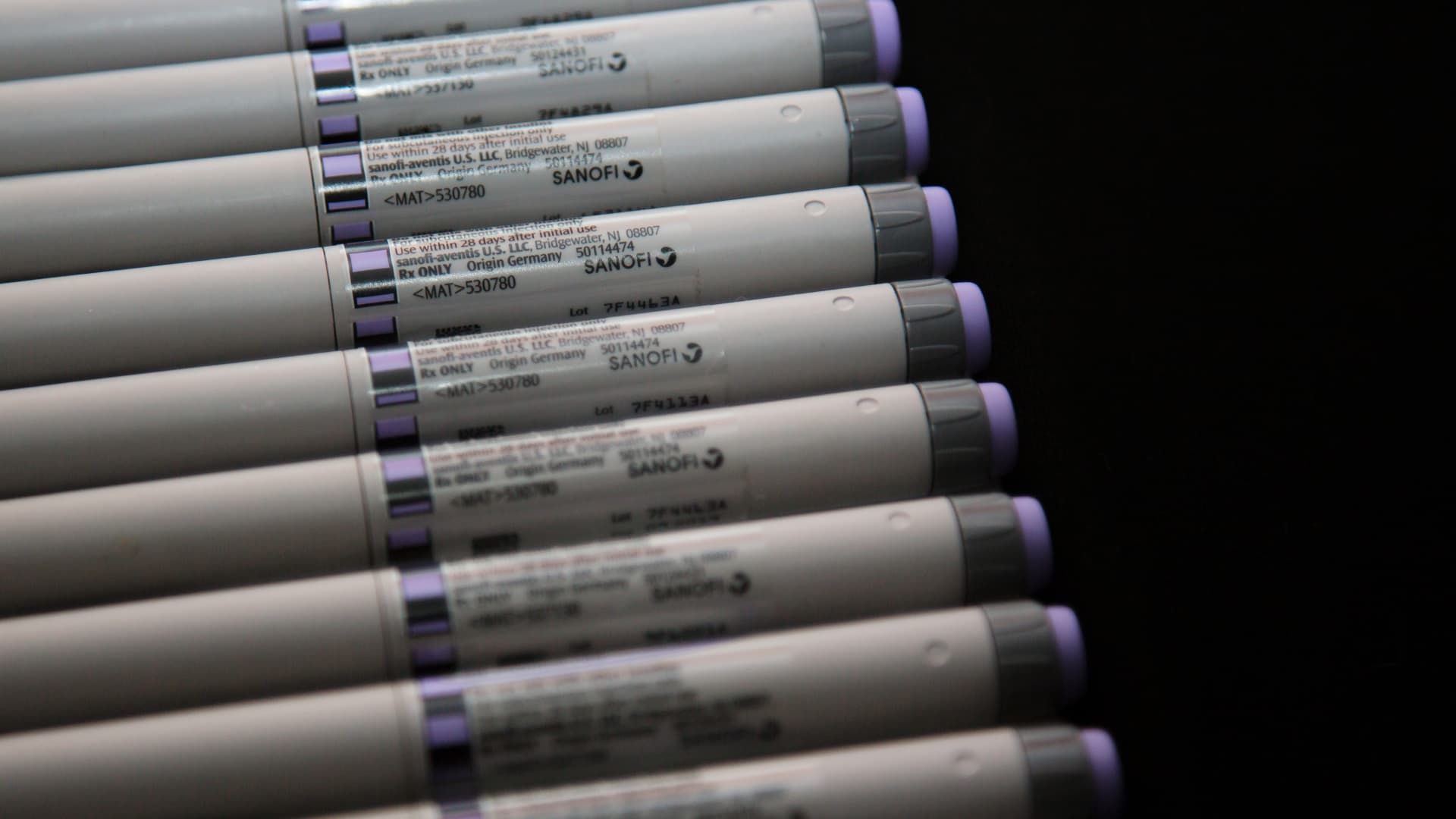
Sanofi Lantus brand insulin pens are arranged for a photograph in the Brooklyn borough of New York, U.S., on Friday, April 5, 2019.
Alex Flynn | Bloomberg | Getty Images
Americans, regardless of their insurance status, can now access Sanofi‘s most widely prescribed insulin for $35 through the prescription drug savings company GoodRx, the companies announced Thursday.
Patients with a valid prescription can specifically access a $35 coupon for Sanofi’s Lantus on GoodRx’s site and redeem it at more than 70,000 retail pharmacies across the U.S., including CVS, Walgreens and Walmart.
The effort aims to make the $35 price point for Lantus more widely accessible to Americans, even after Sanofi – along with its rivals Eli Lilly and Novo Nordisk – announced sweeping insulin price cuts and out-of-pocket cost caps earlier this year.
Those three companies, which control over 90% of the global insulin market, moved to slash prices after years of political pressure and public outrage over the high costs of diabetes care in the U.S. Americans pay roughly eight times more for insulin than other developed countries, making diabetes the country’s most expensive chronic condition.
Sanofi said in March that it would lower list prices for Lantus and cap out-of-pocket costs for people with insurance at $35 a month. But the change won’t be effective until January.
The French company also has an existing patient assistance program to cap insulin prices for uninsured diabetes patients at the same price. But some patients have struggled to access the $35 price point, even with that program in place.
That’s due to low awareness among patients about copay cards and patient savings programs that can assist with out-of-pocket costs. Health experts and patient advocates have raised concerns that those programs, which manufacturers run, often require people to jump through hoops just to save money.
Pharma companies spend more than $5 billion on marketing patient support programs every year, but only 3% of patients actually use them, according to a 2021 survey from Phreesia Life Sciences.
President Joe Biden’s Inflation Reduction Act also capped monthly insulin costs for Medicare beneficiaries at $35, but it did not provide protection to diabetes patients who have private insurance.
Roughly 37 million people in the U.S., or 11.3% of the country’s population, have diabetes, according to the Centers for Disease Control and Prevention. Approximately 8.4 million diabetes patients rely on insulin, the American Diabetes Association said.


