


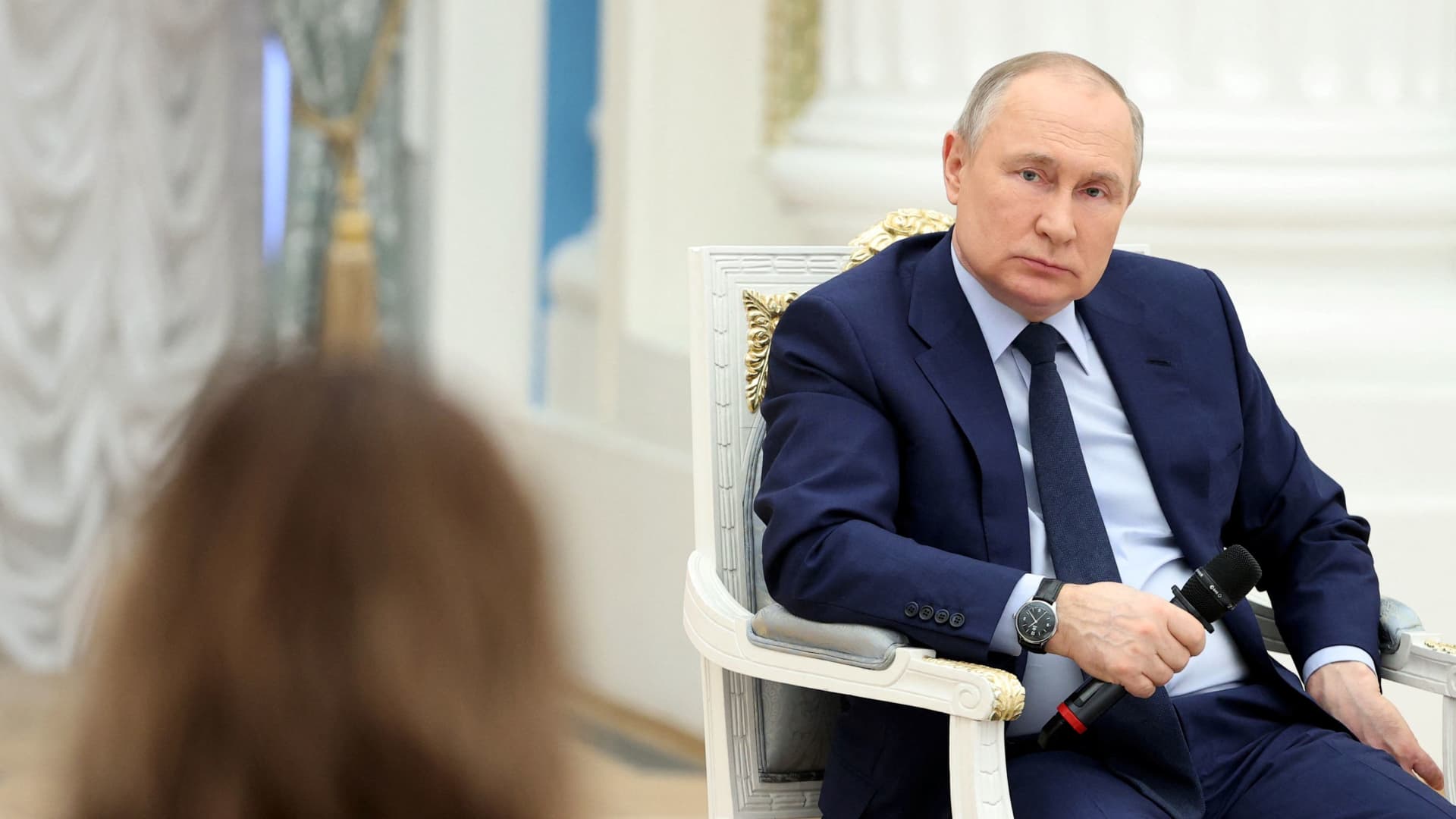
Russia faces renewed threat of debt default on May 4, according to major ratings agencies, as the grace period comes to a close after it attempted to service its dollar bond payments in Russian rubles.
Mikhail Tereshchenko | Sputnik | via Reuters
Russia looks set to meet another deadline for debt payments on Wednesday after tapping its domestic foreign currency reserves to avert a historic sovereign default.
The U.S. Office of Foreign Assets Control, the department at the Treasury that administers and enforces economic and trade sanctions, received the payments from Moscow last week. And Bloomberg reported Tuesday that at least one international clearinghouse had processed payments for $650 million in coupon and principal payments on eurobonds maturing in 2022 and 2042.
The funds have reportedly been channeled to the London branch of Citibank, but it is unclear whether they will reach their intended recipients before the deadline. A spokeswoman for Citibank declined to comment.
The Russian Finance Ministry’s U-turn on Friday came after it initially attempted to make payments on its dollar-denominated bonds in Russian rubles on April 4. Major ratings agencies suggested this would constitute a first foreign debt default since 1917 if Moscow did not manage to meet its obligations in foreign currency by the end of the month-long grace period on May 4.
Timothy Ash, senior EM sovereign strategist at BlueBay Asset Management, on Tuesday expressed surprise that the OFAC had seemingly waved through the payments after its prior tough messaging.
“OFAC is keeping all options open. It still has the option of not extending the general license on May 27, and can act any time to stop Western institutions from processing bond repayments,” he told CNBC via email.
Ash said the latest developments had shown both that Russia wants to pay its foreign creditors and has the resources to do so, beyond those frozen by sanctions.
“OFAC can force Russia into default at any time. OFAC is still in the driving seat,” he added.
The attempt to pay in rubles came after the U.S. Treasury Department refused in early April a waiver for Russian payments to foreign bondholders to go through despite U.S. sanctions, a special permission it had granted in March.
Around half of Russia’s vast foreign currency reserves have been frozen by punitive economic sanctions imposed by international powers in the wake of its invasion of Ukraine.
S&P Global Ratings downgraded Russia’s foreign-debt credit rating to “selective default” after its April 4 ruble payment, while prior to the attempted dollar payment, Moody’s had suggested that deviating from the payment terms of the original bond contracts by paying in rubles may be considered a default on May 4 unless remedied.


