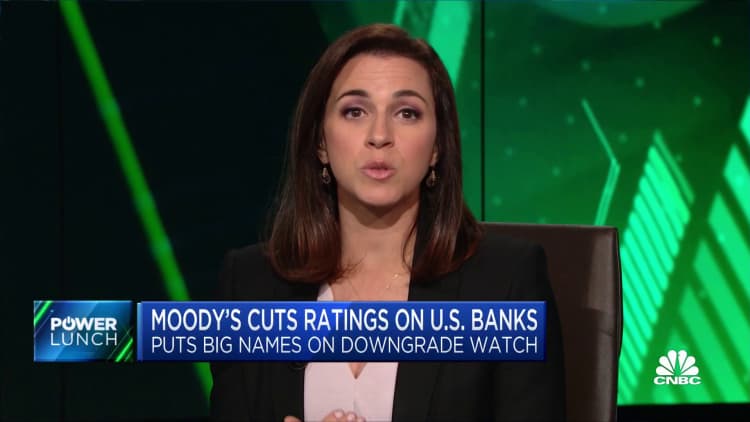
The Moody’s ratings downgrades and outlook warnings on a swath of U.S. banks this week show that the industry still faces pressure after the collapse of Silicon Valley Bank.
Concern over the sector had waned after second-quarter results showed most banks stabilized deposit levels following steeper losses during the March regional banking crisis. But a new issue may cast a pall over small and midsized banks: They’ve been forced to pay customers more for deposits at a pace that outstrips growth in what they earn from loans.
“Banks kept their deposits, but they did so at a cost,” said Ana Arsov, global co-head of banking for Moody’s Investors Service and a co-author of the downgrade report. “They’ve had to replace it with funding that’s more expensive. It’s a profitability concern as deposits continue to leave the system.”
Banks are usually expected to thrive when interest rates rise. While they immediately charge higher rates for credit-card loans and other products, they typically move more slowly in increasing how much they pay depositors. That boosts their lending margins, making their core activity more profitable.
This time around, the boost from higher rates was especially fleeting. It evaporated in the first quarter of this year, when bank failures jolted depositors out of their complacency and growth in net interest margin turned negative.
“Bank profitability has peaked for the time being,” Arsov said. “One of the strongest factors for U.S. banks, which is above-average profitability to other systems, won’t be there because of weak loan growth and less of an ability to make the spread.”
Shrinking profit margins, along with relatively lower capital levels compared to peers at some regional banks and concern about commercial real estate defaults, were key reasons Moody’s reassessed its ratings on banks after earlier actions.
In March, Moody’s placed six banks, including First Republic, under review for downgrades and cut its outlook for the industry to negative from stable.
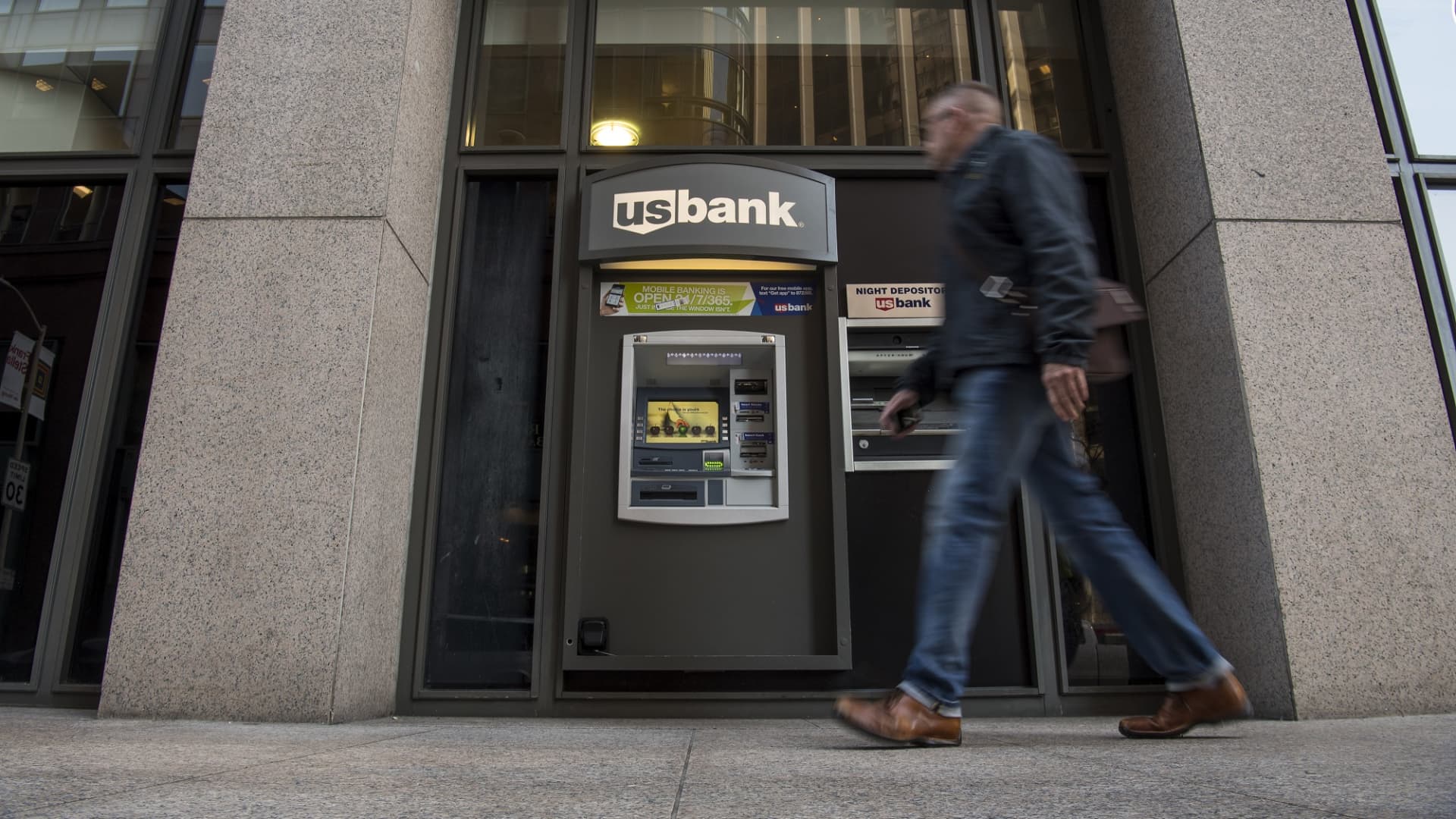
Falling margins affected several banks’ credit considerations. In company-specific reports this week, Moody’s said it had placed U.S. Bank under review for a downgrade for reasons including its “rising deposit costs and increased use of wholesale funding.”
It also lowered its outlook on Fifth Third to negative from stable for similar reasons, citing higher deposit costs.
The analyst stressed that the U.S. banking system was still strong overall and that even the banks it cut were rated investment grade, indicating a low risk of default.
“We aren’t warning that the banking system is broken, we are saying that in the next 12 months to 2 years, profitability is under pressure, regulation is rising, credit costs are rising,” Arsov said.