If you’ve heard a ton of pro-AI chatter in new days, you’re in all probability not on your own.
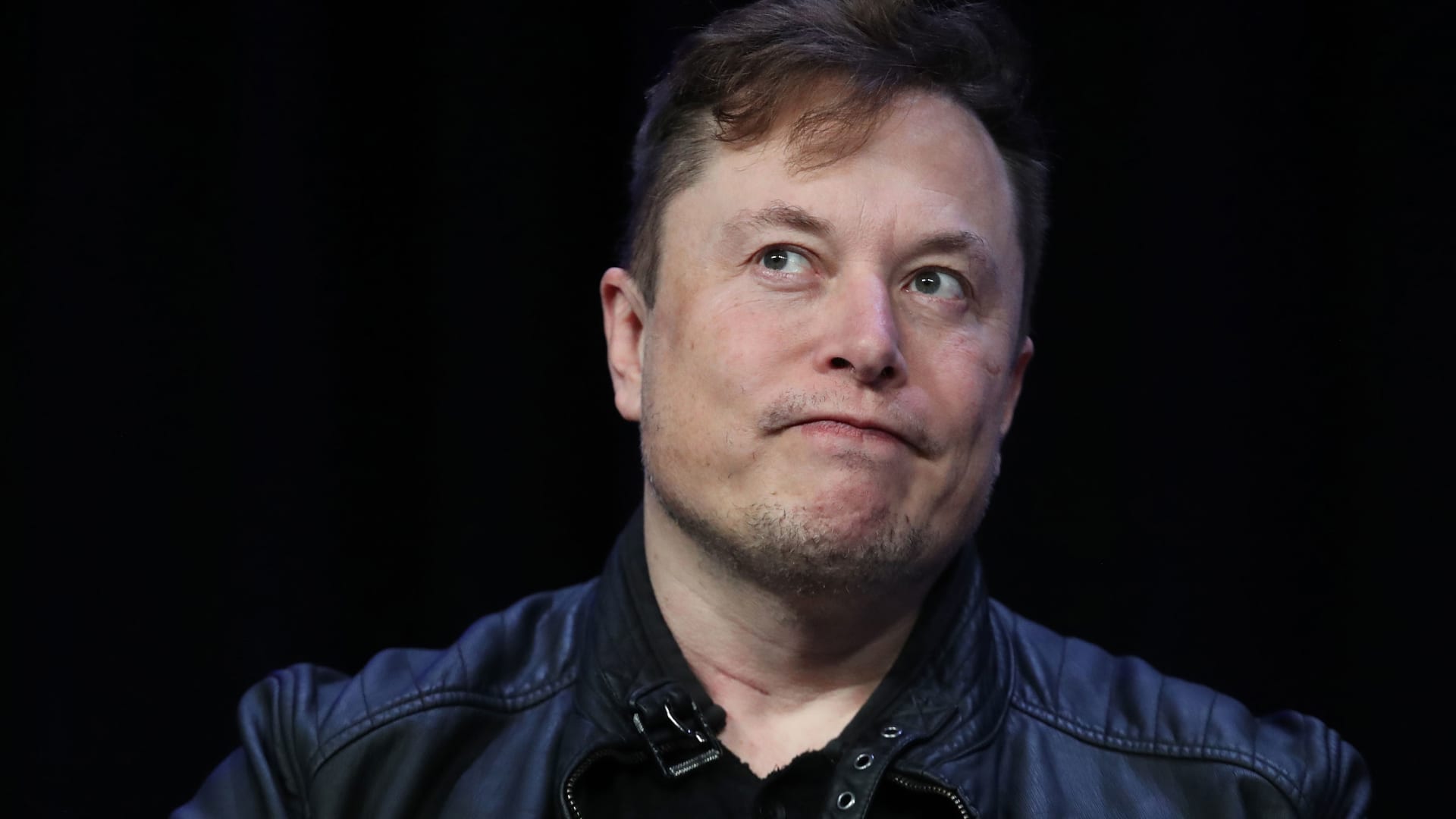
AI developers, notable AI ethicists and even Microsoft co-founder Bill Gates have expended the earlier week defending their perform. That is in response to an open letter revealed final week by the Foreseeable future of Lifetime Institute, signed by Tesla CEO Elon Musk and Apple co-founder Steve Wozniak, calling for a six-month halt to perform on AI devices that can compete with human-degree intelligence.
The letter, which now has much more than 13,500 signatures, expressed worry that the “dangerous race” to develop plans like OpenAI’s ChatGPT, Microsoft’s Bing AI chatbot and Alphabet’s Bard could have negative consequences if left unchecked, from popular disinformation to the ceding of human employment to equipment.
But huge swaths of the tech market, together with at minimum just one of its most significant luminaries, are pushing back.
“I do not consider asking 1 individual group to pause solves the challenges,” Gates informed Reuters on Monday. A pause would be tricky to enforce across a international market, Gates extra — though he agreed that the field requirements additional exploration to “recognize the tough places.”
That is what makes the discussion interesting, professionals say: The open letter may well cite some reputable fears, but its proposed solution looks difficult to obtain.
Here’s why, and what could materialize future — from governing administration rules to any potential robot uprising.
What are Musk and Wozniak concerned about?
The open letter’s problems are relatively clear-cut: “Recent months have found AI labs locked in an out-of-handle race to create and deploy ever a lot more highly effective digital minds that no a single — not even their creators — can recognize, predict, or reliably management.”
AI programs generally arrive with programming biases and possible privacy troubles. They can greatly distribute misinformation, specially when applied maliciously.
And it is quick to visualize companies trying to save money by replacing human careers — from private assistants to customer provider reps — with AI language units.
Italy has currently briefly banned ChatGPT around privateness issues stemming from an OpenAI data breach. The U.K. authorities revealed regulation tips past week, and the European Buyer Organisation referred to as on lawmakers throughout Europe to ramp up laws, far too.
In the U.S., some members of Congress have known as for new legal guidelines to control AI engineering. Very last thirty day period, the Federal Trade Commission issued guidance for companies building this sort of chatbots, implying that the federal government is holding a shut eye on AI units that can be applied by fraudsters.
And a number of condition privateness laws passed past calendar year intention to force companies to disclose when and how their AI goods do the job, and give buyers a likelihood to decide out of providing personal knowledge for AI-automatic choices.
Those laws are now energetic in California, Connecticut, Colorado, Utah and Virginia.
What do AI builders say?
At minimum a single AI safety and investigation firm isn’t nervous but: Existing technologies you should not “pose an imminent problem,” San Francisco-based Anthropic wrote in a blog submit previous thirty day period.
Anthropic, which gained a $400 million expenditure from Alphabet in February, does have its personal AI chatbot. It mentioned in its blog post that long term AI programs could develop into “a great deal a lot more highly effective” around the following decade, and developing guardrails now could “assist reduce threats” down the street.
The difficulty: Nobody’s pretty positive what these guardrails could or should really look like, Anthropic wrote.
The open letter’s means to prompt conversation all over the matter is helpful, a business spokesperson tells CNBC Make It. The spokesperson did not specify regardless of whether Anthropic would assist a 6-month pause.
In a Wednesday tweet, OpenAI CEO Sam Altman acknowledged that “an powerful global regulatory framework which include democratic governance” and “sufficient coordination” between top artificial normal intelligence (AGI) organizations could enable.
But Altman, whose Microsoft-funded enterprise would make ChatGPT and aided produce Bing’s AI chatbot, didn’t specify what all those guidelines may well entail, or reply to CNBC Make It truly is ask for for comment on the open up letter.
Some researchers elevate one more difficulty: Pausing analysis could stifle progress in a rapidly-going field, and permit authoritarian nations creating their individual AI units to get forward.
Highlighting AI’s prospective threats could encourage undesirable actors to embrace the technologies for nefarious uses, states Richard Socher, an AI researcher and CEO of AI-backed research motor startup You.com.
Exaggerating the immediacy of those threats also feeds unneeded hysteria around the subject matter, Socher says. The open letter’s proposals are “not possible to enforce, and it tackles the problem on the completely wrong level,” he provides.
What occurs now?
The muted reaction to the open letter from AI builders appears to be to reveal that the tech giants and startups alike are unlikely to voluntarily halt their do the job.
The letter’s call for improved federal government regulation appears far more probable, in particular considering the fact that lawmakers in the U.S. and Europe are by now pushing for transparency from AI builders.
In the U.S., the FTC could also establish policies demanding AI developers to only educate new units with information sets that you should not include things like misinformation or implicit bias, and to boost screening of people products prior to and right after they are produced to the general public, in accordance to a December advisory from legislation company Alston & Chook.
This kind of initiatives require to be in put in advance of the tech advances any more, says Stuart Russell, a Berkeley University computer system scientist and foremost AI researcher who co-signed the open up letter.
A pause could also give tech companies extra time to confirm that their superior AI methods you should not “existing an undue possibility,” Russell told CNN on Saturday.
The two sides do appear to concur on just one issue: The worst-circumstance scenarios of rapid AI progress are value blocking. In the short phrase, that suggests offering AI product users with transparency, and protecting them from scammers.
In the extensive time period, that could suggest keeping AI devices from surpassing human-amount intelligence, and retaining an skill to management it successfully.
“The moment you get started to make devices that are rivalling and surpassing people with intelligence, it can be going to be quite tricky for us to endure,” Gates told the BBC again in 2015. “It is just an inevitability.”
Never Pass up: Want to be smarter and more productive with your funds, function & lifestyle? Indicator up for our new e-newsletter!
Take this study and convey to us how you want to get your funds and job to the subsequent stage.