It’s well documented that Blockbuster’s video rental dominance spurred the launch of Netflix. What’s less known is it was also the catalyst for HBO’s pivot toward original programming, according to former HBO and Time Warner CEO Jeff Bewkes.
HBO, which stands for Home Box Office, centered its original consumer proposition around bringing unedited theatrical movies to people’s living rooms. Debuting in 1972, HBO charged a monthly fee to allow consumers to see full feature-length movies at home without commercials. While other premium networks came along offering similar products, such as Showtime, Encore and Starz, HBO continued to add subscribers through the 1980s by offering movies along with a small smattering of live boxing, comedy specials and concerts.
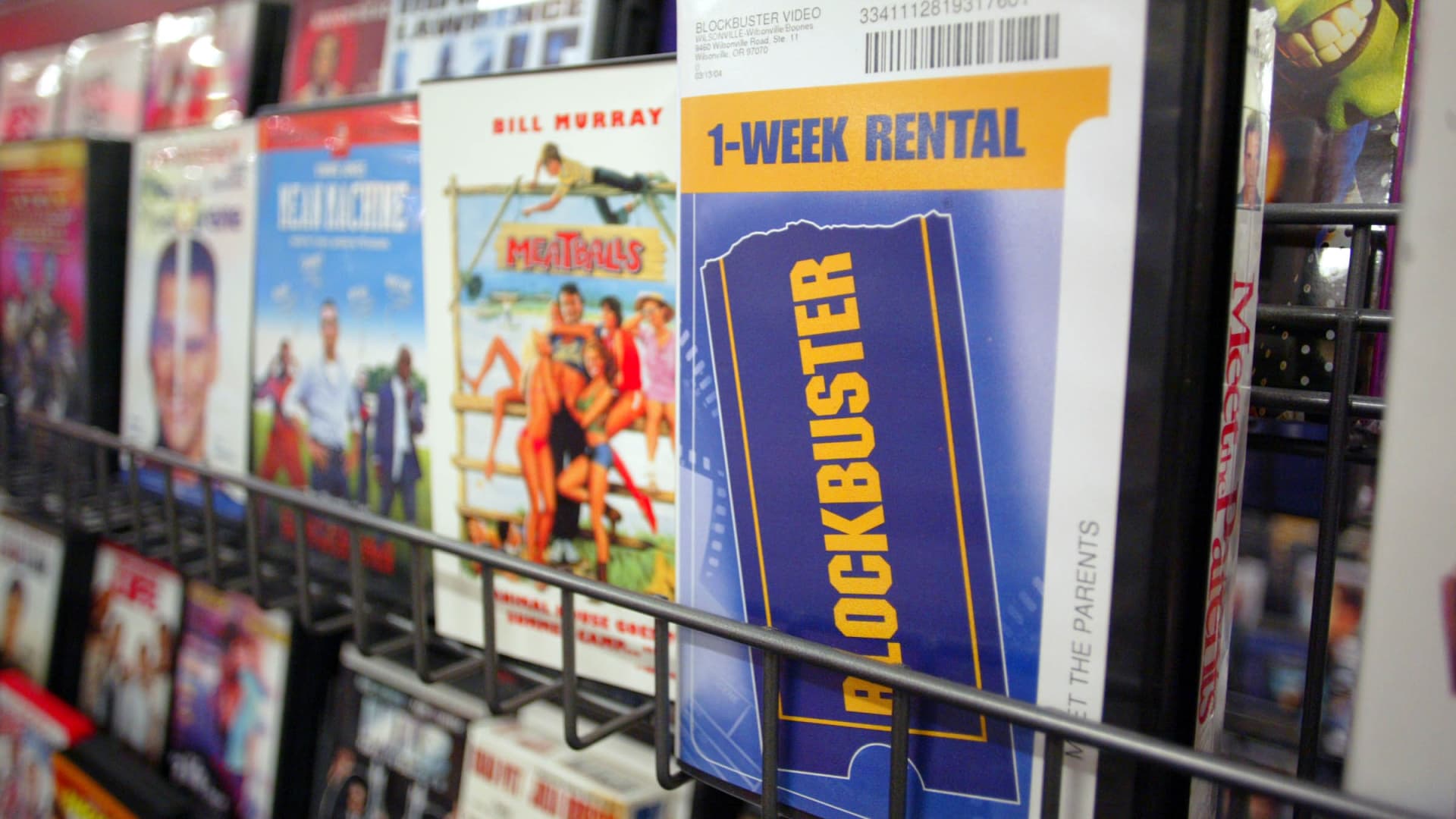
The first Blockbuster opened in 1985. Through the late 1980s, Blockbuster undercut HBO’s business proposition. Consumers now had another way to watch uncut, commercial-free movies in the house, and now they could do it on demand. HBO only broadcast one movie at a time. Blockbuster offered thousands of movies. Movie studios viewed the rental market as a booming industry and offered Blockbuster its films six months ahead of HBO’s window.
“Movies were our No. 1 selling point,” said former HBO and Time Warner Chief Executive Officer Jeff Bewkes, who spoke to CNBC as part of a digital documentary on the history of HBO. “We’re sitting at HBO saying, ‘We’re screwed.’ Our No. 1 reason why people want to subscribe to HBO is now being taken by Blockbuster. What are we going to do?”
HBO, at the time led by Michael Fuchs, decided the answer was original programming. With only a few million dollars to spend, Fuchs placed two small bets on two original comedy series: “Dream On,” which premiered in 1990, and “The Larry Sanders Show,” which arrived in 1992.
“That pretty much shot our budget,” said Bewkes, who started working at HBO in 1979 and ran the network from 1995 to 2002. He later became CEO of Time Warner, the parent company of HBO. “We called it the best hour on TV. But I used to tweak Michael [Fuchs] about it, ‘Yeah, the best hour on TV — it literally is almost only one hour because we only had like 10 half-hours a year of ‘Dream On’ and ‘Larry Sanders.’ We had 10 hours of serious programming. We’d be repeating stuff to the point of nausea.”
While HBO had dabbled in original content before, including launching Jim Henson’s “Fraggle Rock” in 1983, “Dream On” and “Larry Sanders” were HBO’s first two adult hits. Both shows lasted for six seasons and ushered in HBO’s golden age of original programming, setting the stage for “Sex and The City,” “Oz” and “The Sopranos,” which all first aired in the late 1990s while Bewkes was HBO’s CEO.
Tony and Carmela Soprano.
Source: HBO | YouTube
Even after “The Sopranos” debuted, HBO still faced a dilemma over how much to invest in original shows. HBO’s TV schedule was always shifting, based on the length of feature films. While network shows always aired at a set time, HBO didn’t have that luxury. It also didn’t have consistent lead-in shows to boost the audience for new programming, as NBC famously constructed with its Thursday “Must See TV” featuring shows including “Seinfeld,” “Friends,” “Mad About You” and “ER” during the 1990s.
HBO tackled Blockbuster’s “on demand” advantage and differentiated itself from network TV by building technology that made past episodes available to subscribers. HBO On Demand first began in 2001, allowing subscribers to catch up on previous seasons of shows and build episodic larger audiences for episodic series.
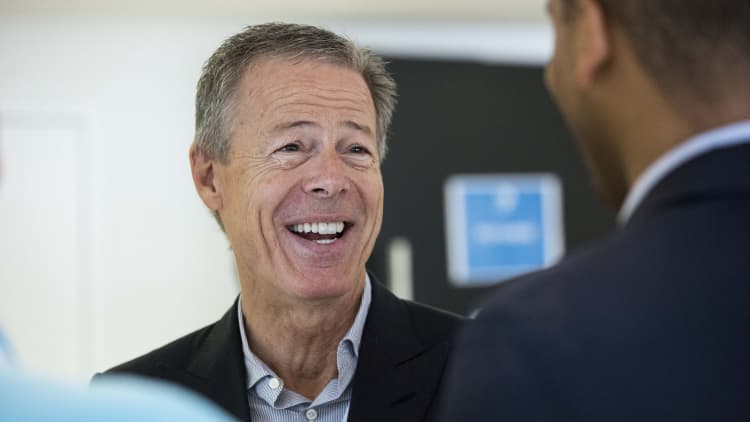
Jeffrey Bewkes, former chief executive officer of Time Warner Inc. and HBO.
Christophe Morin | Bloomberg | Getty Images
“It allowed us to do long form,” said Bewkes. “It gave us the ability to make completely different stuff. Now we can make series like ‘Band of Brothers,’ ‘Sopranos’ — something where it’s sequential. If you didn’t watch the show last week, you could watch it this week.”
Blockbuster ended up being the company that couldn’t recover from disruption. It filed for bankruptcy in 2010. AT&T acquired Time Warner in 2018. Renamed WarnerMedia, AT&T divested the unit in a merger with Discovery Communications last year forming Warner Bros. Discovery.
Had HBO’s early investments in original programming not hit, Bewkes acknowledged he’s not sure what HBO would have done to fight off Blockbuster.
“Thank God those shows [hit],” Bewkes said. “If they didn’t hit, I don’t know what the hell would have happened.”
Disclosure: NBCUniversal is the parent company of CNBC.
WATCH: Full interview with former Time Warner CEO Jeff Bewkes about the evolution of HBO