


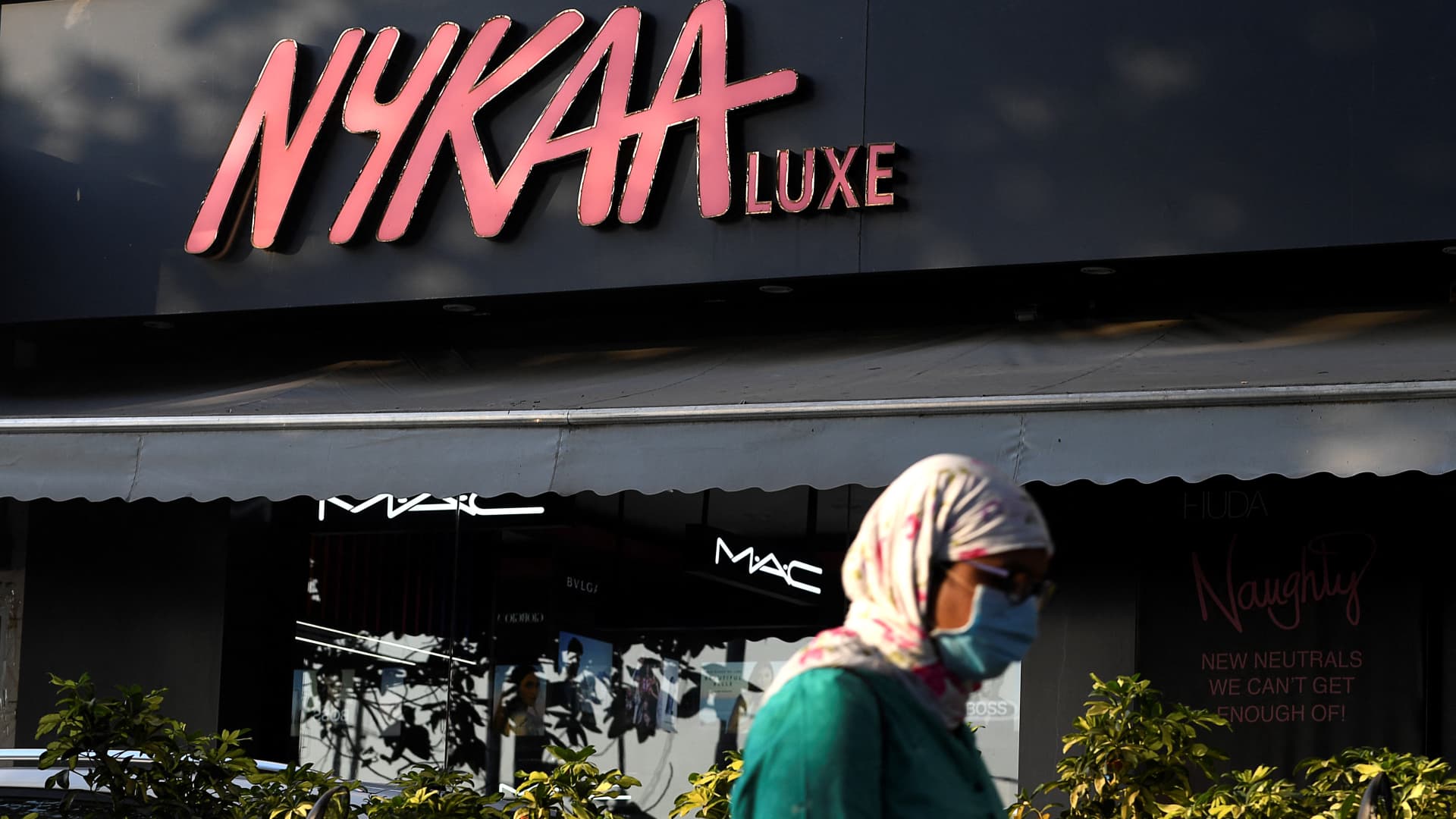
While Nykka started as an e-commerce platform, founder and CEO Falguni Nayar is a “big believer” in physical retail and said there is demand from consumers.
“The last two years have been very much impacted by Covid-19 and what it does to physical retail. However, we do believe that if you look at the math and statistics, e-commerce penetration is only 8%,” Nayar said on CNBC’s “Street Signs Asia” on Thursday.
“A lot of beauty is sold offline and Nykka has become such a big brand that we cannot ignore our offline channel as well as offline consumers. There will be greater emphasis on stores, but I think we will continue to be a dominant e-commerce player.”
Nykka, which sells cosmetics, grooming and fashion products, currently has 100 retail stores in India, with its latest opening just last week. The company had a blockbuster debut in November hitting a valuation of almost $14 billion – making it India’s first woman-led unicorn listing.
In its most recent quarterly report, however, the company reported a 58% plunge in net profits.
Other newly public Indian companies have come under pressure as the halo of their high-profile IPOs fades and valuations come under scrutiny. Earlier this week, Reuters reported that India will probe companies hoping to IPO about valuation metrics.
While these companies largely had stellar debuts, many are now trading well below their IPO price –including Nykka, Paytm, Zomato and CarTrade.
Inflation pressure
Nayar said tech valuations would see “some adjustment” due to high inflation globally and rising interest rates. For Nykka, she said the latest round of coronavirus restrictions in major Chinese cities will likely present supply chain challenges.
“I think that is holding us back and sometimes we have to take additional stock, assuming that disruptions will be there,” said Nayar, who founded the company in 2012.
While Nayar said the impact of surging commodity prices and inflation remains a key watcher, she is confident in “the lipstick effect.”
“Cosmetics and beauty are those small luxuries that consumers don’t cut down on so drastically because at the end of the day, the percentage spent on beauty in the country is as low as $12 to $14 per capita,” she explained.
“We do believe that the beauty industry is in an inherent structural change where Indian consumers want more beauty consumption,” she added.