


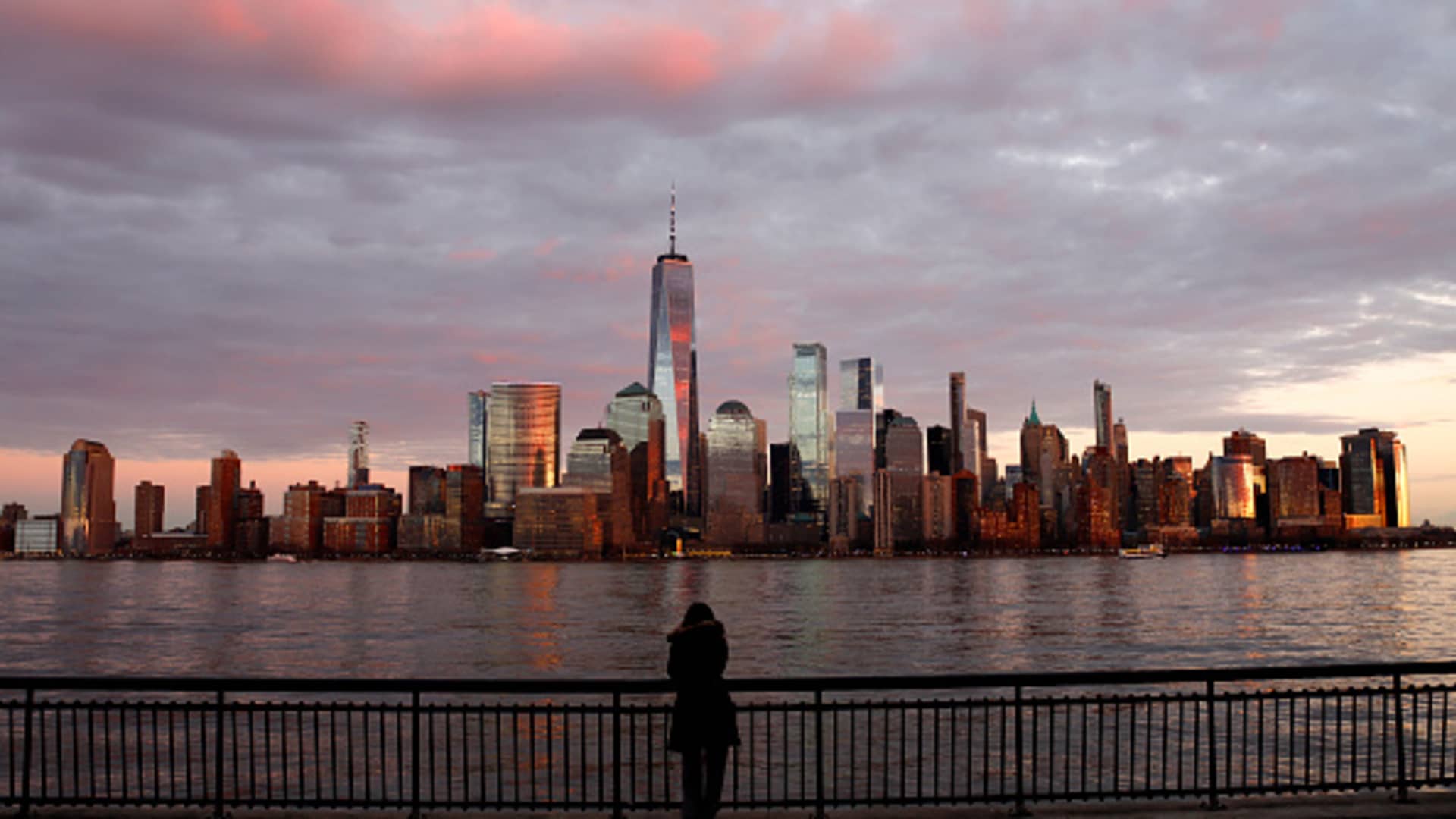
Skyline in lower Manhattan.
Gary Hershorn | Corbis News | Getty Images
Over the last two years, the richest 1% of people have accumulated close to two-thirds of all new wealth created around the world, a new report from Oxfam says.
A total of $42 trillion in new wealth has been created since 2020, with $26 trillion, or 63%, of that being amassed by the top 1% of the ultra-rich, according to the report. The remaining 99% of the global population collected just $16 trillion of new wealth, the global poverty charity says.
“A billionaire gained roughly $1.7 million for every $1 of new global wealth earned by a person in the bottom 90 percent,” the report, released as the World Economic Forum kicks off in Davos, Switzerland, reads.
It suggests that the pace at which wealth is being created has sped up, as the world’s richest 1% amassed around half of all new wealth over the past 10 years.
Oxfam’s report analyzed data on global wealth creation from Credit Suisse, as well figures from the Forbes Billionaire’s List and the Forbes Real-Time Billionaire’s list to assess changes to the wealth of the ultra-rich.
The research contrasts this wealth creation with reports from the World Bank, which said in October 2022 that it would likely not meet its goal of ending extreme poverty by 2030 as the Covid-19 pandemic slowed down efforts to combat poverty.
Gabriela Bucher, executive director of Oxfam International, called for taxes to be increased for the ultra-rich, saying that this was a “strategic precondition to reducing inequality and resuscitating democracy.”
In the report’s press release, she also said changes to taxation policies would help tackle ongoing crises around the world.
“Taxing the super-rich and big corporations is the door out of today’s overlapping crises. It’s time we demolish the convenient myth that tax cuts for the richest result in their wealth somehow ‘trickling down’ to everyone else,” Bucher said.
Coinciding crises around the world that feed into each other and produce greater adversity together than they would separately are also referred to as a “polycrisis.” In recent weeks, researchers, economists and politicians have suggested that the world is currently facing such a crisis as pressures from the cost-of-living crisis, climate change, and other pressures are colliding.


