


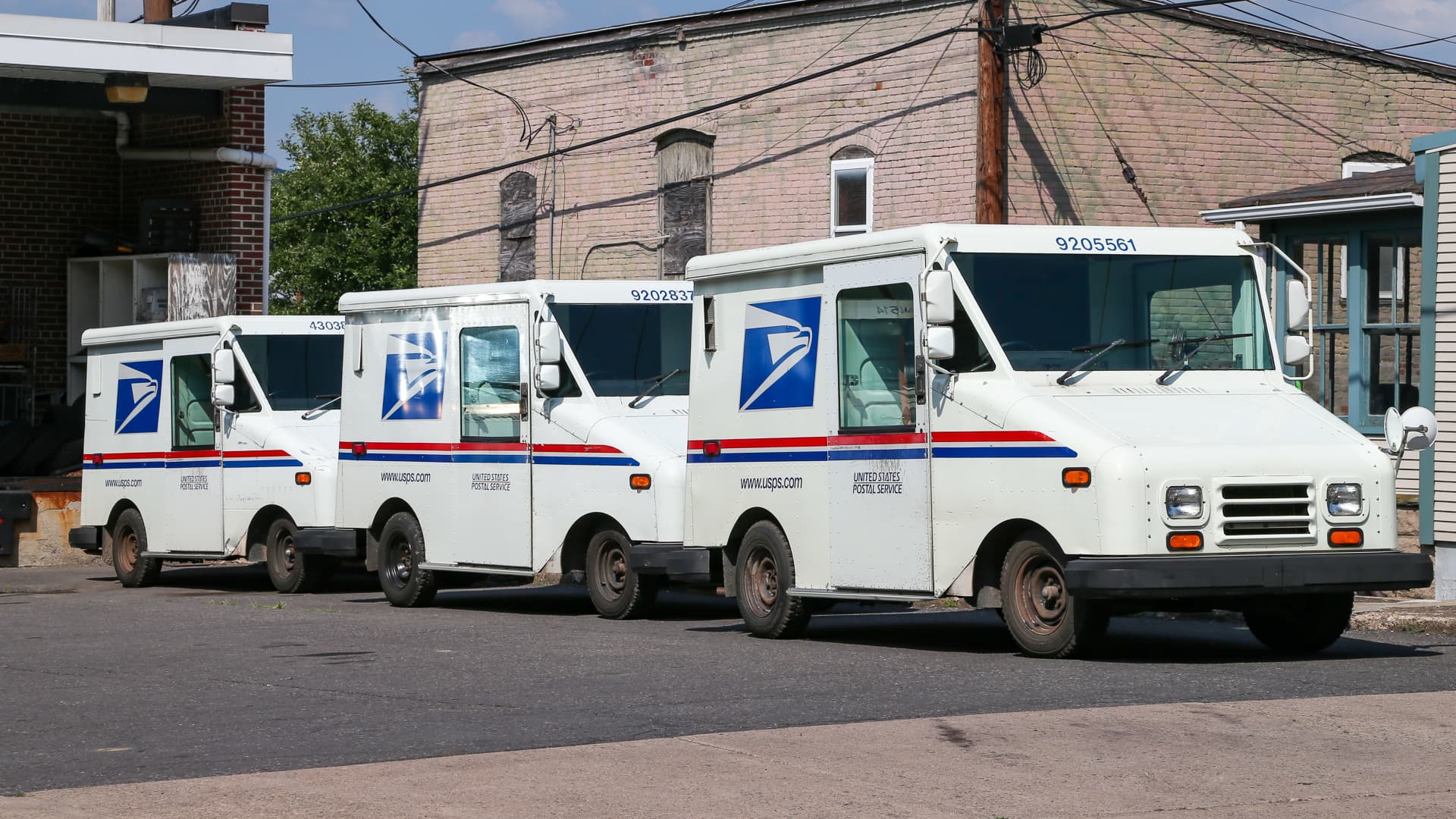
Three United States Postal Service (USPS) mail trucks are parked in front of the post office in Danville. On July 20, the USPS announced that at least 40 percent of its Next Generation Delivery Vehicles (NGDVs) and commercial off-the-street (COTS) vehicles will be battery electric vehicles.
Paul Weaver | Sopa Images | Getty Images
The U.S. Postal Service said Tuesday that it intends to purchase at least 66,000 electric delivery vehicles as part of a push to transform its delivery fleet.
The electric vehicles would amount to more than half the 106,000 vehicles it plans to acquire for delivery between now and 2028. The new vehicles will start to replace its aging fleet of 220,000 vehicles, the Postal Service said in a press release.
The Postal Service has faced public pressure from environmental campaigns to electrify its fleet.
In April, environmental groups filed a lawsuit against the USPS for its failure to conduct an adequate environmental analysis before deciding to replace its vehicle fleet with more “fuel-guzzling combustion mail trucks,” according to a press release from the Sierra Club.
“Instead of receiving pollution with their daily mail packages, communities across the U.S. will get the relief of cleaner air,” Katherine García, director of the Sierra Club’s Clean Transportation for All campaign, said in a statement on Tuesday.
The Sierra Club was one of the groups pressuring the USPS to go electric.
The USPS said Tuesday its investment is expected to reach $9.6 billion, about a third of which comes from the Inflation Reduction Act. The funding will help the Postal Service build what has the potential to be one of the largest electric vehicle fleets in the country, Postmaster General Louis DeJoy said in a statement.
“We have a statutory requirement to deliver mail and packages to 163 million addresses six days per week and to cover our costs in doing so — that is our mission,” DeJoy said. “As I have said in the past, if we can achieve those objectives in a more environmentally responsible way, we will do so.”

