


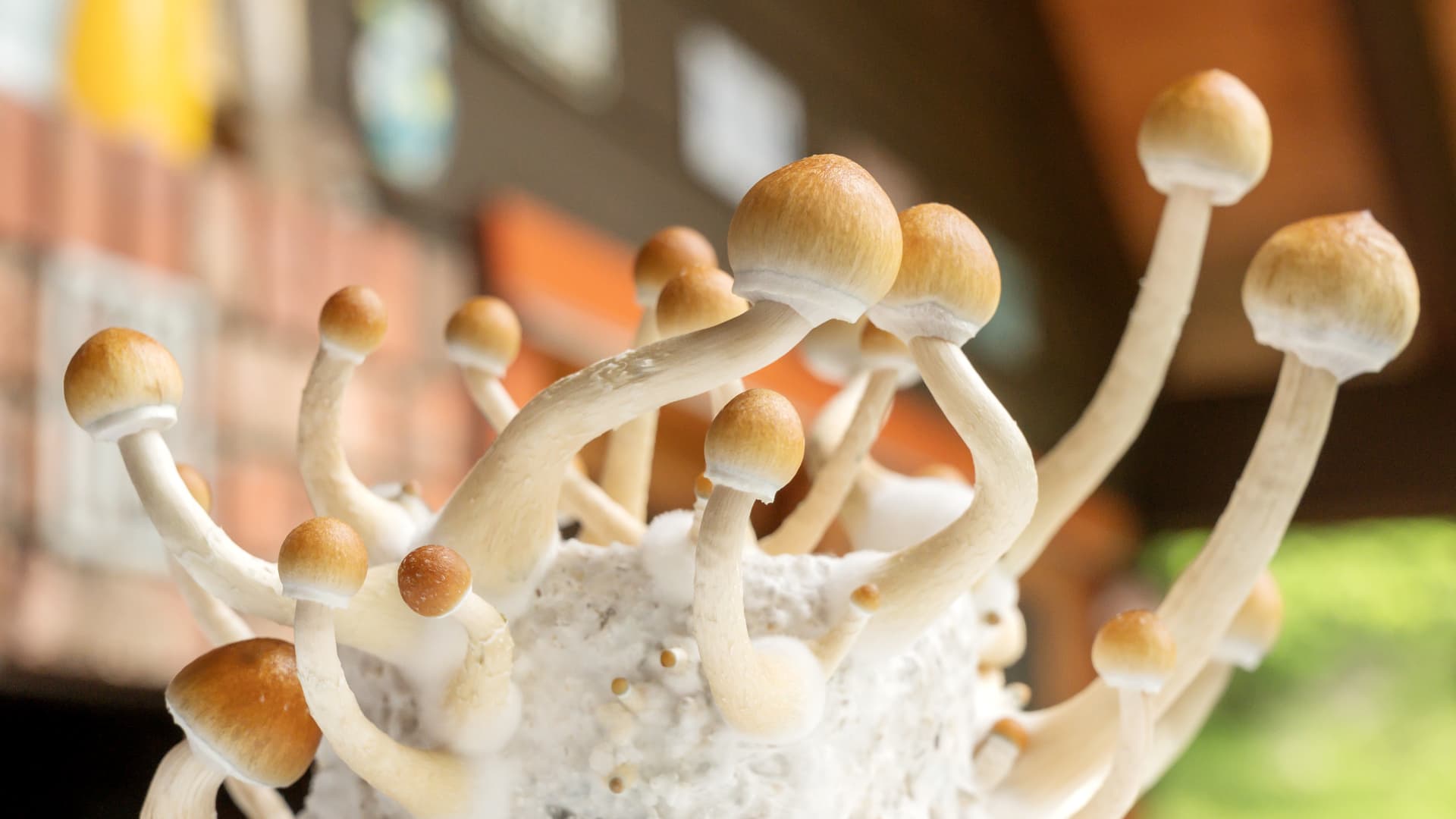
The naturally occurring psychedelic compound psilocybin can significantly reduce symptoms of depression, according to data from the largest trial of its type ever conducted.
David Buzzard – media-centre.ca / Getty Images
LONDON — The naturally occurring psychedelic compound psilocybin can significantly reduce symptoms of depression, according to data from the largest trial of its type ever conducted.
Psilocybin was given to 233 patients who had already tried at least two antidepressants in the past with little success, suggesting the compound could have huge benefits for those suffering with hard-to-treat depression.
After receiving the psilocybin, patients entered a “walking dream-like” state for between four and six hours and then left the clinic once they had returned to their normal state.
The trial found that a 25mg dose of psilocybin, given alongside psychological support, triggered a reduction in levels of depression three weeks after treatment.
The study, published Thursday in the New England Journal of Medicine, was carried out internationally by London-based COMPASS Pathways.
Around 100 million people worldwide suffer with depression that is resistant to treatment, and so the findings of the study are a step in the right direction, according to James Rucker, consultant psychiatrist and senior clinical lecturer at King’s College London, who was involved in the study.
“Our task now is to investigate psilocybin for treatment-resistant depression in larger trials with more participants, comparing it both to placebo and to established treatments,” Rucker said, according to a King’s College London press release.
The drugs were trialed in doses of 1mg, 10mg and 25mg and adverse effects recorded across all groups included headaches, nausea and thoughts around suicide.
There was not, however, an equal number of “severely depressed” participants in each dosage group, according to Ravi Das, an associate professor at the University College London Institute of Mental Health, which “does not appear to be acknowledged in the paper,” as reported by Reuters.
Critics have also expressed concern that this could lead to a rise in usage of magic mushrooms in non-pharmaceutical settings.


