


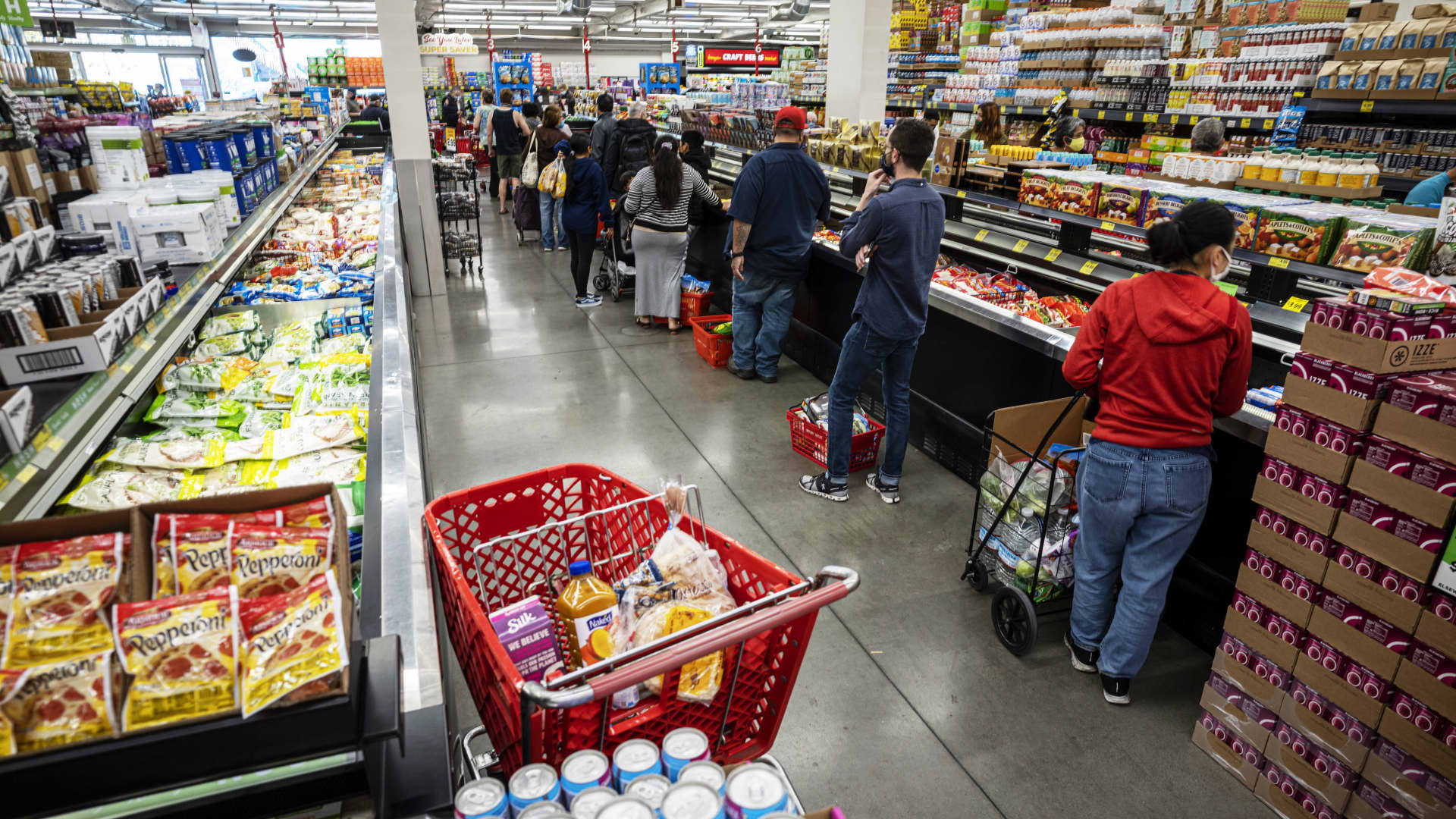
Going to the grocery store isn’t getting any cheaper.
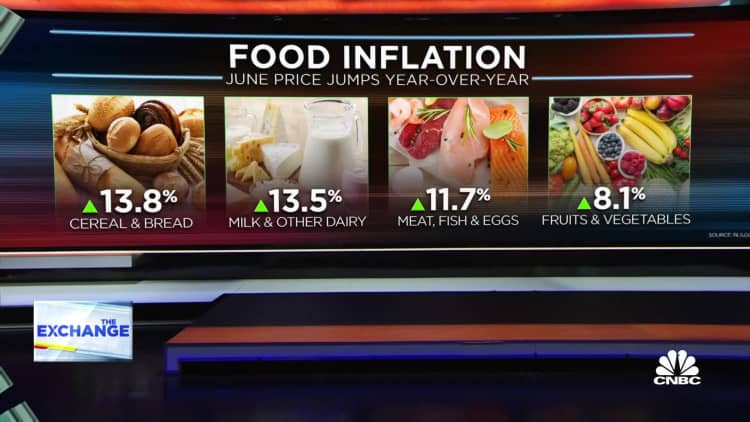
Rising food costs helped push inflation higher again last month, despite a drop in gas prices. The food index alone rose 11.4% over the past year, according to the latest consumer price index figures — marking the biggest 12-month jump since May 1979.
The food-at-home index, a measure of price changes at the grocery store, increased 13.5% — also a 43-year high.
In the face of higher prices, consumers have been cutting back, according to Mark Hamrick, a senior economic analyst at Bankrate.com. However, “food, at its basic level, is not discretionary,” he said. “That’s the challenging aspect of the circumstances we are in.”
Prices for staples like eggs, milk, cereal, bread and butter notched some of the largest increases, further straining household budgets.
Inflation has also led many food and beverage companies, including Coca-Cola and PepsiCo, to raise the prices on drinks and packaged goods. Some are also making their packages smaller — also known as “shrinkflation” — or swap in less expensive ingredients, a tactic now termed “skimpflation.”
“Grocery product manufacturers know that while most shoppers will immediately notice a price increase, they are less likely to catch a reduction in a product’s net weight or a switch to using cheaper ingredients,” said Edgar Dworsky, the founder of Consumer World, who has been tracking the downsizing of popular products, such as Charmin, Quaker Instant Oatmeal and Honey Bunches of Oats.
More from Personal Finance:
Secondhand shopping is booming
More Americans are tapping buy now, pay later services
These steps can help you tackle stressful credit card debt
The Federal Reserve has already taken aggressive steps to fight surging inflation, and a survey released earlier this week by the New York Fed showed consumers are growing less fearful about rising prices — although they still expect the inflation rate to be 5.7% a year from now.
“Consumers are prepared for high prices to persist in the foreseeable future, but there’s also a tendency for people to think that things might return to normal,” Hamrick said.
In the meantime, “it’s prudent for individuals to continue to be cautious with their household budgets,” he added.
To that end, savings experts share their top tips to spend less on groceries as food inflation shows no signs of slowing down anytime soon.
“It’s belt-tightening time and has been for a while,” Hamrick said.
5 tips for saving on groceries
- Scrutinize sales. Generic brands can be 10% to 30% cheaper than their “premium” counterparts and just as good, but that’s not always the case. Name brands may be offering bigger-than-usual discounts right now to maintain loyalty, so it pays to pay attention to price changes.
- Plan your meals. When you plan your meals in advance, you’re more likely to just buy the things you need, said Lisa Thompson, a savings expert at Coupons.com. If planning’s not your thing, at least go shopping with a rough idea of what you’ll be cooking in the week ahead to help stay on track and avoid impulse purchases, she added.
- Buy in bulk. When it comes to the rest of the items on your list, you can save more by buying in bulk. Joining a wholesale club such as Costco, Sam’s Club or BJ’s will often get you the best price per unit on condiments and nonperishable goods.
- Use a cash-back app. Ibotta and Checkout 51 are two of the most popular apps for earning cash back at the store, according to Julie Ramhold, a consumer analyst at DealNews.com. The average Ibotta user earns between $10 and $20 a month, but more active users can make as much as $100 to $300 a month, a spokesperson told CNBC.
- Pay with the right card. While a generic cash-back card such as the Citi Double Cash Card can earn you 2%, there are specific grocery rewards cards that can earn you up to 6% back at supermarkets nationwide, such as the Blue Cash Preferred Card from American Express. CNBC’s Select has a full roundup of the best cards for food shopping along with the APRs and annual fees.
Subscribe to CNBC on YouTube.


