




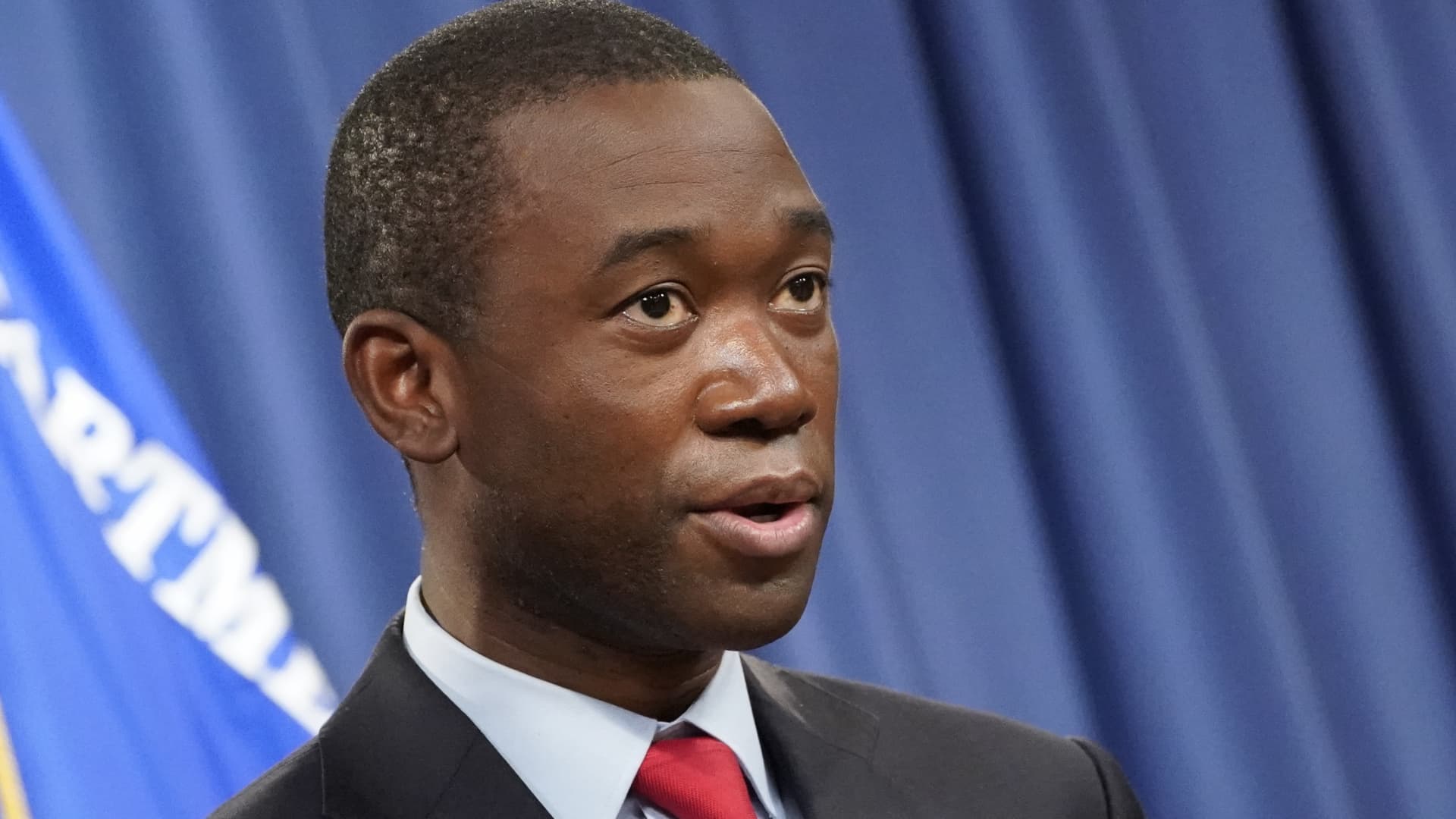
Wally Adeyemo, deputy U.S. Treasury secretary, speaks during a news conference at the Department of Justice in Washington, D.C., U.S., on Monday, Nov. 8, 2021.
Bloomberg | Bloomberg | Getty Images
The U.S. will hold accountable any actor that seeks to help Russia bypass economic sanctions amid the Kremlin’s unprovoked onslaught on Ukraine, Deputy U.S. Treasury Secretary Wally Adeyemo told CNBC on Tuesday.
The U.S. and international allies have imposed a barrage of punitive measures against Russia since the country launched its invasion of Ukraine on Feb. 24.
The conflict has triggered a devastating humanitarian crisis, sent shockwaves through financial markets and left Russia increasingly isolated on the global stage.
“We have not seen to date that Russia has been able to evade our sanctions in a meaningful way, but we know that they are attempting to do so and we know they are going to try and use every means possible,” Adeyemo told CNBC’s “Street Signs Europe.”
He cited cryptocurrencies and opaque shell companies as possible means that Russia may exploit to bypass the economic sanctions.
“What we want to make very clear to crypto exchanges, to financial institutions, to individuals, to anyone who may be in a position to help Russia take advantage and evade our sanctions: We will hold you accountable,” Adeyemo said.
“We will come and we will find you, and we will ensure that Russia does not have the ability to get around the sanctions that we have put in place in order to make it harder for them to prosecute the illegitimate war that they have in Ukraine.”
Crypto concerns
His comments come shortly after the G-7 major economies pledged to ensure the Russian state, elites, proxies and oligarchs would not be able to leverage digital assets to sidestep the impact of international sanctions.
The G-7 group is comprised of the U.K., U.S., Canada, Japan, Germany, France and Italy.
Digital currencies have proven useful in boosting Ukraine’s defenses, with the government raising millions of dollars in crypto donations from the public. At the same time, regulators are worried about their potential use in evading sanctions imposed on Russia.
People who transact in cryptocurrencies are kept anonymous, which has often made them a prime target for cybercriminals. However, experts say it is possible to trace the movement of funds thanks to the public nature of the blockchain, an immutable record of all digital currency transactions.
Nevertheless, crypto exchanges have come under pressure from politicians including Democratic Senator Elizabeth Warren to introduce tougher checks to ensure they can prevent sanctioned individuals and companies from moving their money into crypto.
—CNBC’s Ryan Browne contributed to this report.
