



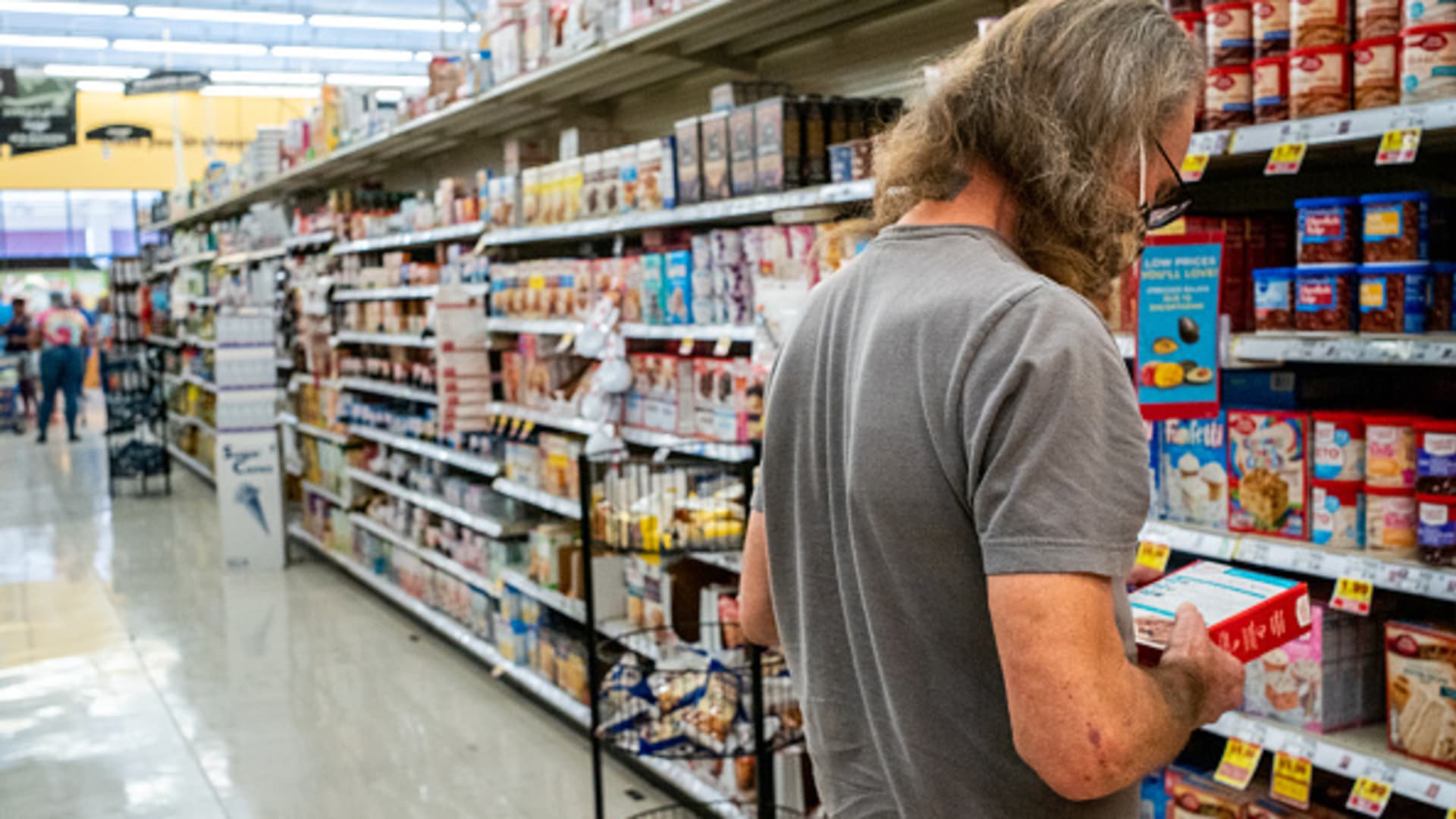
To feel the effects of inflation, just go to the supermarket.
Although inflation, overall, began to ease last month along with gas prices, food costs climbed 1.1% in July, bringing the year-over-year gain to 10.9%, according to the latest Consumer Price Index figures.
The food-at-home index, a measure of price changes at the grocery store, notched the largest 12-month increase since 1979.
Cereals and baked goods cost 15% more than they did last year. Milk and dairy products are 14.9% higher, and fruits and vegetables are up 9.3% over the year.
“Consumers are getting a break at the gas pump, but not at the grocery store,” said Greg McBride, chief financial analyst at Bankrate.com. “Food prices, and especially costs for food at home, continue to soar, rising at the fastest pace in more than 43 years.”
Because the Federal Reserve has already taken aggressive steps to fight surging inflation, consumers expect prices will come down, eventually. They are still expected to climb 6.7% over the next 12 months, but that’s a big decline from June, according to the Federal Reserve Bank of New York’s monthly Survey of Consumer Expectations.
The central bank has hiked its benchmark rate by 2.25 percentage points so far in 2022 and indicated even more increases are coming.
More from Personal Finance:
What a recession could mean for you
Best money moves after the Fed’s interest rate hikes
Nearly half of all Americans are falling deeper in debt
Still, as Tomas Philipson, a professor of public policy studies at the University of Chicago and former acting chair of the White House Council of Economic Advisers, explained, “it will take a while for [the Fed’s rate-hike cycle] to work its way through.”
Until then, here’s how to shield yourself from sticker shock at the supermarket:
5 tips to avoid getting gouged on groceries
- Use a cash-back app. Ibotta and Checkout 51 are two of the most popular apps for earning cash back at the store, according to Julie Ramhold, a consumer analyst at DealNews.com. The average Ibotta user earns between $10 and $20 a month, but more active users can make as much as $100 to $300 a month, a spokesperson told CNBC.
- Scrutinize sales. Generic brands can be 10% to 30% cheaper than their “premium” counterparts and just as good, but that’s not always the case. Name brands may be offering bigger-than-usual discounts right now to maintain loyalty, so it pays to pay attention to price changes.
- Plan your meals. When you plan your meals in advance, you’re more likely to just buy the things you need, said Lisa Thompson, a savings expert at Coupons.com. If planning’s not your thing, at least go shopping with a rough idea of what you’ll be cooking in the week ahead to help stay on track and avoid impulse purchases, she added.
- Buy in bulk. When it comes to the rest of the items on your list, you can save more by buying in bulk. Joining a wholesale club such as Costco, Sam’s Club or BJ’s will often get you the best price per unit on condiments and nonperishable goods.
- Pay with the right card. While a generic cash-back card such as the Citi Double Cash Card can earn you 2%, there are specific grocery rewards cards that can earn you up to 6% back at supermarkets nationwide, such as the Blue Cash Preferred Card from American Express. CNBC’s Select has a full roundup of the best cards for food shopping along with the APRs and annual fees.
Subscribe to CNBC on YouTube.


