


WASHINGTON — The Biden administration faces a legal deadline at midnight to defend former President Donald Trump’s China tariffs, even as the White House considers scaling them back to lower consumer prices and ease inflation.
Scores of companies sued the Trump administration in September 2020, arguing the process of implementing a third and fourth tranche of tariffs on roughly $350 billion in goods was overly broad and hastily implemented. If the Biden administration, having inherited the suit, cannot prove the legitimacy of the tariffs or the process, it may be forced to reevaluate tens of thousands of public comments on the tax penalties, or reimburse the parties for what they’ve paid.
“The stakes are significant,” says Alex Schaefer, international trade partner at Crowell, who represents some of the importers. Schaefer says the government lacks the manpower to process the volume of comments, and refunding importers could cost $80 billion.
The U.S. Trade Representative’s office declined to comment. The Department of Justice, which represents the administration in legal cases, declined to comment on the government’s position but said it could be awhile before there’s a final outcome.
The deadline puts the White House in an awkward position: potentially defending its predecessor’s program, while studying ways potentially to alter it. John Kirby, the National Security Council’s spokesman, recently called the tariffs “poorly designed,” “a shoddy deal” that “increased costs for American families.”
President Joe Biden has yet to make a decision on the options his advisors have presented on the tariffs, according to senior administration officials. The officials and people familiar with the matter have suggested certain fault lines forming in the policy debate, with political aides advising Biden to keep the levies in place to avoid attacks across the aisle.
Ambassador Katherine Tai, who as U.S. Trade Representative holds the leading role on the tariffs, has suggested the Trump tariffs have strategic value in maintaining leverage in negotiations with China. The economic team, led by Treasury Secretary Janet Yellen, has been advocating to roll back at least a some of the tariffs that directly hit consumers to alleviate inflation, according to administration officials who asked not to be identified because the discussions are private.
The economic impact on inflation is difficult to estimate since not all imports affected by tariffs are consumer goods, and not all cost savings incurred by importers at the ports of entry would be felt by consumers at the checkout counter. Analysts at JP Morgan Chase estimated that, if retailers left prices relatively unchanged, removing all tariffs would lower inflation by at most 0.4%.
In mid-June, White House aides confirmed they asked retail executives, which have long lobbied for relief on items like bicycles, furniture and air-conditioning units, whether tariff relief would be passed through to consumers. According to three people briefed on the meetings, retailers told the administration the calculus wasn’t so straightforward because their companies’ own transportation and labor costs had risen significantly, too.
The National Security Council has backed a third option in the tariff discussion — rolling back a subset of tariffs while launching a new investigation into China’s industrial subsidies, an idea that appears to be gaining traction, according to administration officials.
“There’s no question that as we reorient our policy with China that we are going to need to ratchet up our suite of trade tools in sectors and in areas where you see the clearest threat from Chinese state-run practices,” another senior administration official tells CNBC, while noting all options remain on the table.
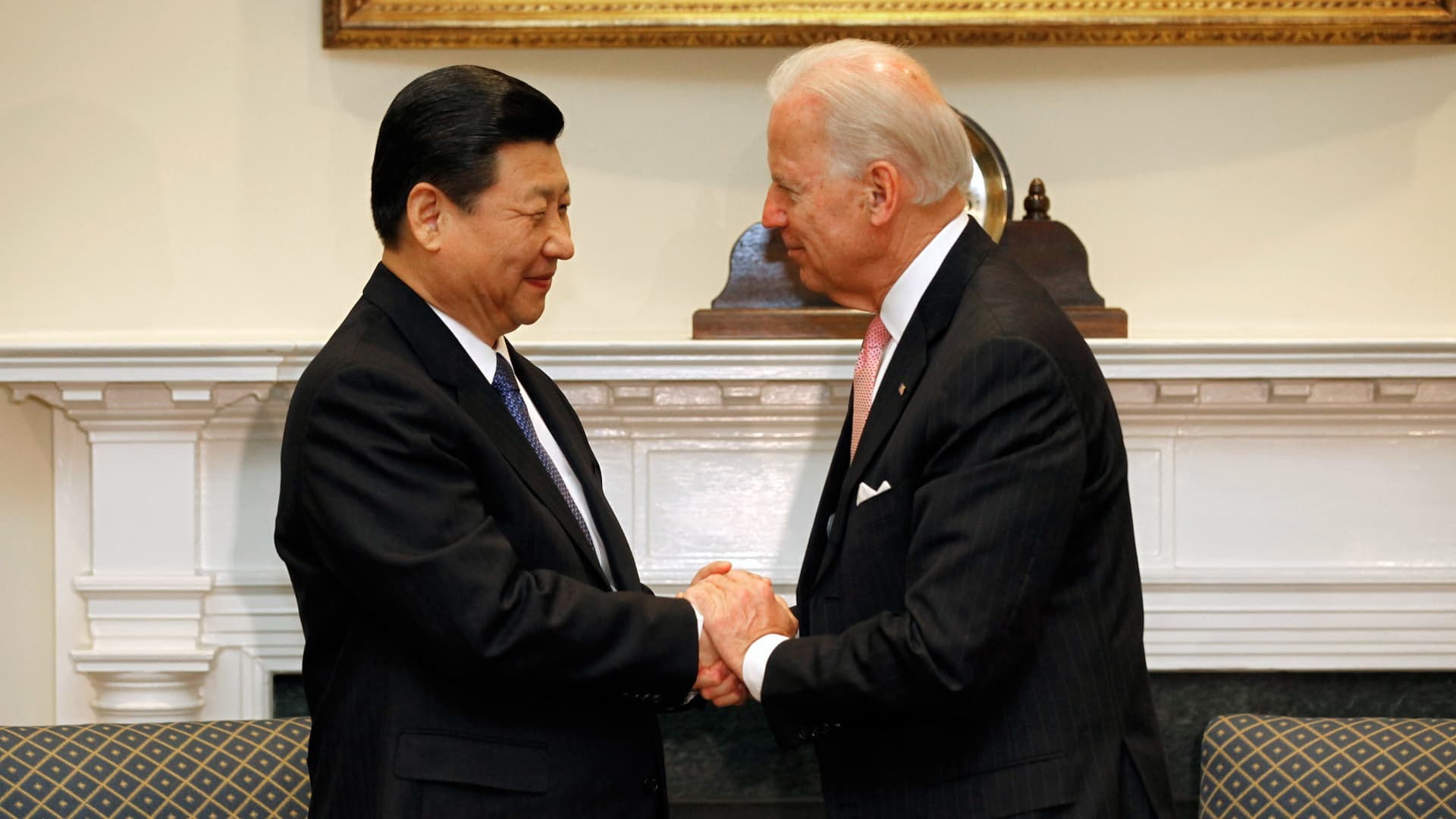
It remains unclear when Biden will make a decision, and whether China would be prepared to respond in kind if the U.S. removed a portion of tariffs. Foreign policy experts have suggested coupling tariff relief with an intensifying investigation could anger Beijing as the two countries work toward an in-person meeting between Biden and Xi Jinping, the Chinese president.
Frosty relations and rhetoric between the two countries amid recent tensions may require some distance.
“Modest tariff relief is still likely,” says Clete Willems, a partner at Akin Gump who served as deputy National Economic Council director for Trump during the tariff rollout. “But the administration may want some distance from the Xi call and (House Speaker Nancy) Pelosi’s trip to Taiwan for domestic and international political reasons.”
But if the U.S. government loses in the Court of International Trade, those political winds may push the Biden administration toward strengthening its hand against China.
“If all of a sudden the tariffs are functionally chopped back by half,” Schaefer says, “that may amplify the need to do that new case as quickly as they can.”


