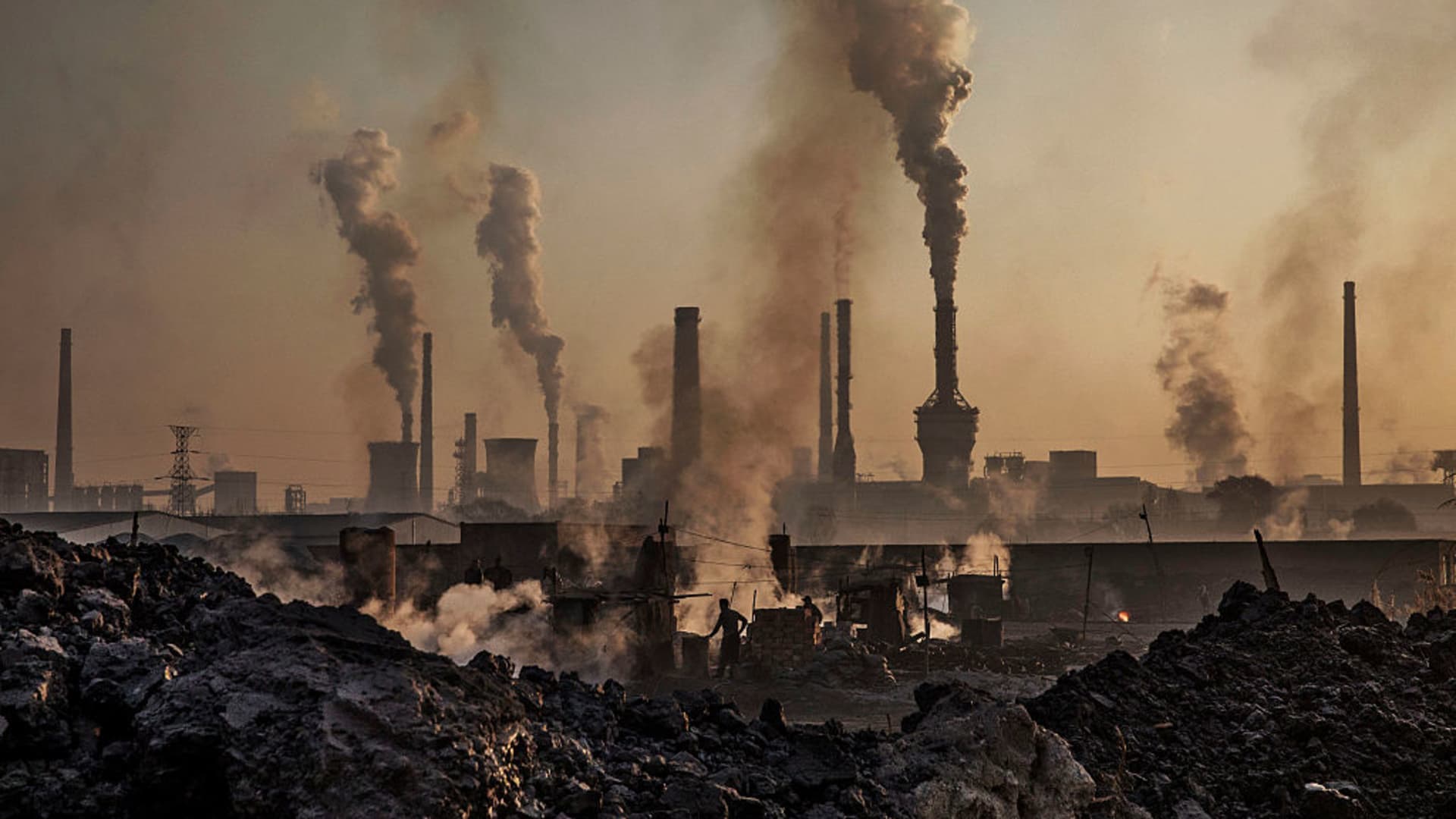
Smoke billows from an unauthorized metal factory, foreground, on November 4, 2016 in Inner Mongolia, China. To meet up with China’s targets to slash emissions of carbon dioxide, authorities are pushing to shut down privately owned steel, coal, and other high-polluting factories scattered throughout rural areas. (Photograph by Kevin Frayer/Getty Illustrations or photos)
Kevin Frayer | Getty Visuals Information | Getty Photographs
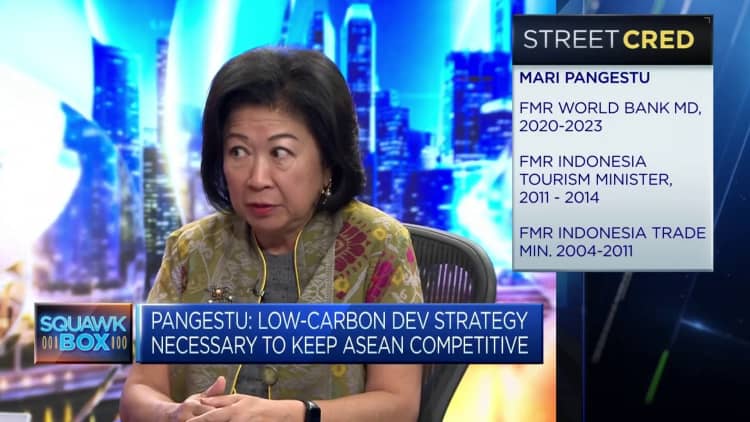
Establishing nations will require much more than $1 trillion each individual yr to make sizeable progress in climate changeover, in accordance Mari Pangestu, a previous Environment Financial institution formal.
“The estimate is like $1 [trillion] to $3 trillion a calendar year for establishing nations around the world to be ready to changeover,” she explained to CNBC’s “Squawk Box Asia” on Thursday.
The absence of funding has created it hard for those people nations around the world to lower their substantial carbon emissions and change to cleanse vitality, Pangestu extra. This has led to tensions in between producing nations and the formulated world, which are pushing for extra development in local weather associated challenges.
“This debate is heading to go on except if produced nations can see that this is about growth and weather — not just about local weather,” Pangestu, a former trade and tourism minister for Indonesia, reported.
“And that has been the supply of stress. You are not able to different the two,” she included, underlining the “important phrase is basically — changeover.”
“How do you changeover from the substantial emission now to cleanse vitality? It will require us to have methods.”
This was “section of the bone of rivalry,” for the deficiency of progress designed in the a short while ago concluded Group of 20 local climate ministers meeting in India, Pangestu explained.
The talks in late July wrapped up without the need of consensus on essential matters to handle the weather crisis such as the issue of financing to assist developing countries, the doc showed.
India’s climate modify minister Bhupender Yadav, who chaired the conference, acknowledged there had been “some issues about power, and some target-oriented issues.”
Sharp criticism
The July local climate conference was observed as a likelihood for the world’s major polluters to acquire concrete measures ahead of a G20 leaders’ meeting in September in New Delhi and the COP28 Summit in the United Arab Emirates in December.
The failure to attain a offer drew withering criticism from environmental activists.
“Europe and North Africa are burning, Asia is ravaged with floods nevertheless G20 weather ministers have unsuccessful to agree on a shared path to halt the local climate crisis which is escalating working day by day,” reported Alex Scott of local climate improve consider-tank E3G.
“Reports of Saudi Arabia and China stifling the forum’s political space to even discuss a new direction on the strength transition fly in the face of their promises of defending the pursuits of developing nations around the world,” he additional.
China turned down reviews it experienced obstructed weather discussions at the G20 local climate conference, expressing “related experiences entirely run counter to the info.”
The Ministry of Foreign Affairs insisted the meeting “achieved beneficial and balanced results.”
“However, some nations around the world launched geopolitical difficulties as an obstruction and the meeting unsuccessful to adopt a communique. China finds it regrettable,” the ministry explained without having elaborating.
‘Scale and urgency’
There’s a “scale and urgency” to handle the climate disaster, stated Pangestu, adding it requires bigger energy from all stakeholders.
“Part of that will have to arrive from countries’ individual resources,” she mentioned. “Also section of it has to arrive from multilateral progress banking companies and other sources, which are likely to minimize the charge and risks — so that you can get non-public sector to appear in.”
Pangestu argued that if designed nations want to shift away from fossil fuels and “retire coals plants early,” extra help should be presented to building nations around the world.
“What South Africa and Indonesia have completed more a short while ago on this distinct situation is say: ‘That’s high-quality and perfectly, you want us to get out early’ — but who’s going to fund the value of acquiring out early?” she requested.
“These are private organizations, you have to also compensate them. You can find a authorized difficulty, economic concern. So this is exactly where we need to have to really get into the guidelines and the reforms.”